-

- Sopto Home
-

- Special Topic
-
- Converter Knowledge
-
- What is Protocol Converter?

Converter Knowledge
- Form Factors and Application of Ethernet Media Converter
- Ethernet over 4 E1 Converter Brief Introduction
- What is the Difference between RS232 and RS485 Serial Interfaces
- What is the Difference between RS232 and RS485 Serial Interfaces
- How to Convert an Analog Telephone to VoIP Protocol?
- How to Find the Internet Protocol Address and Media Access Contr
- How to Convert from Fast Ethernet to Fiber Optics?
- How to Connect a Fiber Converter?
- How to Convert Ethernet to Fiber Media Converters?
SOPTO Special Topic
Certificate
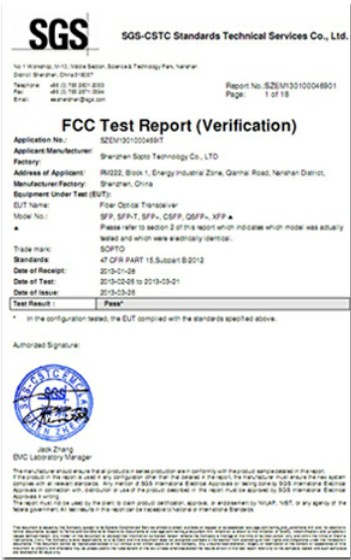
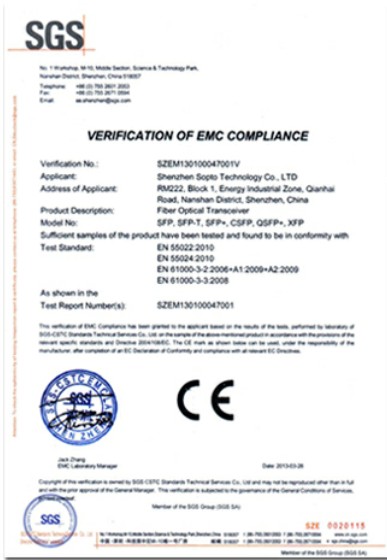
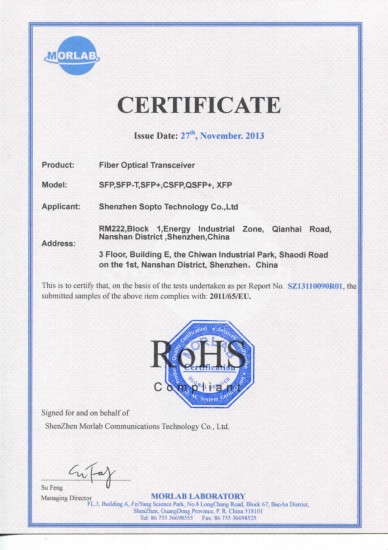
Guarantee
Except products belongs to Bargain Shop section, all products are warranted by SOPTO only to purchasers for resale or for use in business or original equipment manufacturer, against defects in workmanship or materials under normal use (consumables, normal tear and wear excluded) for one year after date of purchase from SOPTO, unless otherwise stated...
Return Policies
Defective products will be accepted for exchange, at our discretion, within 14 days from receipt. Buyer might be requested to return the defective products to SOPTO for verification or authorized service location, as SOPTO designated, shipping costs prepaid. .....
Applications
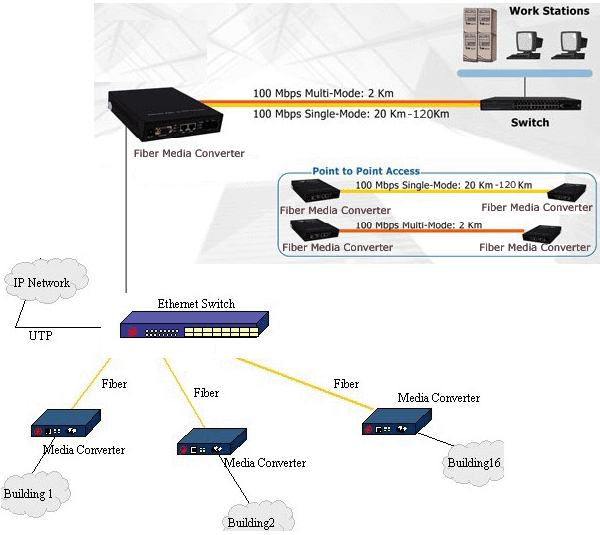
An Ethernet to Fiber Media Converter can also be used where there is high level of electromagnetic interference or EMI which is a common phenomenon found in industrial plants. This interference can cause corruption of data over copper-based ethernet links. Data transmitted over fiber optic cable however is completely immune to this type of noise. An Ethernet to Fiber Optic Converter therefore enables you to inter-connect your copper-ethernet devices over fiber ensuring optimal data transmission across the plant floor.
SNS Page


SOPTO Products
- Fiber Optic Transceiver Module
- High Speed Cable
- Fiber Optical Cable
- Fiber Optical Patch Cords
- Splitter CWDM DWDM
- PON Solution
- FTTH Box ODF Closure
- PCI-E Network Card
- Network Cables
- Fiber Optical Adapter
- Fiber Optical Attenuator
- Fiber Media Converter
- PDH Multiplexers
- Protocol Converter
- Digital Video Multiplexer
- Fiber Optical Tools
- Compatible
Related Products
Performance Feature
Converter Knowledge
Recommended
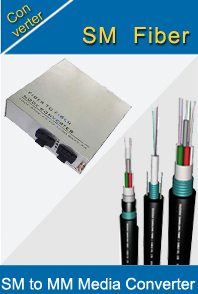
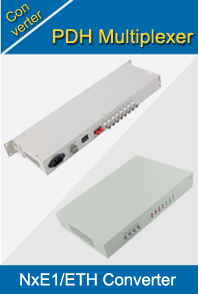
What is Protocol Converter?
A protocol converter is used in telecommunications and networking to switch the protocol of one machine to match the protocol of another, with each protocol based on many factors. The end result of a protocol converter is to allow the protocol of one machine interact with the protocol of another, increasing the amount of machines the network can use. While the penalties normally are slight, conversion from one protocol to another may slow the connection speed, especially if the converted protocol innately has a lower data rate. Most converters have a database with several protocols, and this database is used to convert the initial protocol to another format.
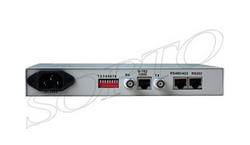
E1 to N x ETH Converter
The majority of networks have many machines using different protocols, and these protocols dictate how a machine acts. These protocols are determined by several factors, including data rate, encryption methods, file and message formats and associated service, because some services exclusively use one protocol. A protocol converter is tasked with taking this protocol and changing it to another one.
Within a network, the large number of different machines made by separate manufacturer means there is a possibility that different machines will run on different protocols. This can make work difficult, because most protocols are inherently incompatible with one another, thus preventing machines with different protocols from integrating. By using a protocol converter, users can bypass this difficulty by changing the protocol, which allows the different machines to work together — as long as the converter supports the protocols of each machine.
A protocol converter usually is helpful, but there may be some penalties for using this device. Protocols have different speeds and data rates, and some are innately slower than others. If the converter changes a fast protocol to a slower one, then there usually are noticeable changes in speed. The converter requires power to work and the function of changing the protocol takes some time, so this also can decrease speed slightly.
Most protocol converter units are programmed to understand a handful of different protocols, and these units use an internal database to track all the protocols. This database will store all the factors associated with the known protocols, and the database also is tasked with helping this device understand what needs to be changed to alter one protocol to another. Unlike regular databases, which can be manually updated, this database typically is locked from users.
Related Knowledge:
Multi-port UTP Media Converter
Common Problem of Fiber Media Converter
How to select and purchase fiber media converter?
Using fiber media converters with copper networks