


Multiplexer Knowledge
- Why is Multiplexing Needed in Data Communication Systems?
- What is Concept of Multiplexing in Telephone System?
- What is Digital TV Frequency?
- Outlook of the WDM Networks
- DWDM Technical Overview
- CWDM Technical Overview
- How to Activate Cable Modems?
- How to Install a Fiber Optic Modem?
- How do I Choose a Best Fiber Modem?
SOPTO Special Topic
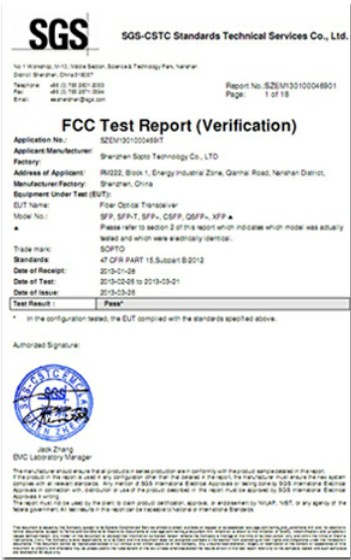
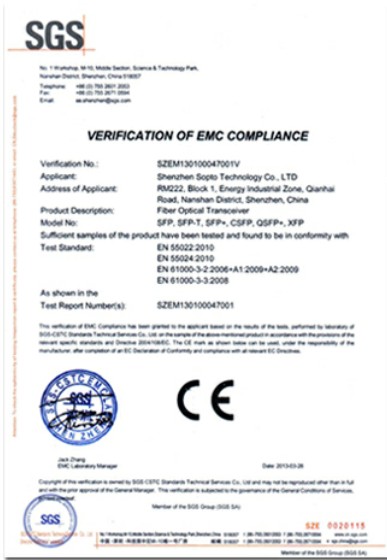
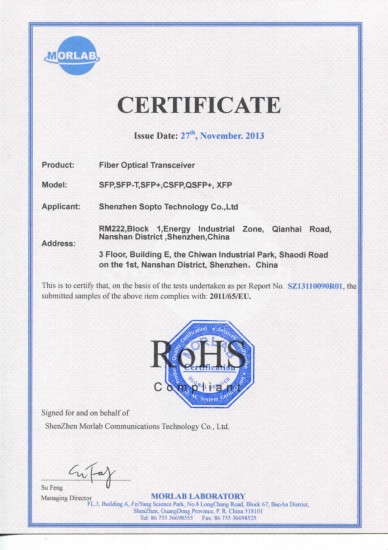
Certificate
Guarantee
Except products belongs to Bargain Shop section, all products are warranted by SOPTO only to purchasers for resale or for use in business or original equipment manufacturer, against defects in workmanship or materials under normal use (consumables, normal tear and wear excluded) for one year after date of purchase from SOPTO, unless otherwise stated...
Return Policies
Applications
Multiplexers can be used to connect PBX, Hot line and other devices of network from central site to user site through fiber optical cable.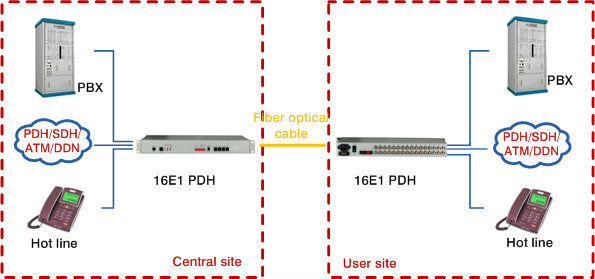
SNS Page


SOPTO Products
- Fiber Optic Transceiver Module
- High Speed Cable
- Fiber Optical Cable
- Fiber Optical Patch Cords
- Splitter CWDM DWDM
- PON Solution
- FTTH Box ODF Closure
- PCI-E Network Card
- Network Cables
- Fiber Optical Adapter
- Fiber Optical Attenuator
- Fiber Media Converter
- PDH Multiplexers
- Protocol Converter
- Digital Video Multiplexer
- Fiber Optical Tools
- Compatible
Related Products
Performance Feature
Recommended
- What is Synchronous Digital Hierarchy?
SDH (Synchronous Digital Hierarchy) is a standard technology for synchronous data transmission on optical media. It is the international equivalent of Synchronous Optical Network. Both technologies provide faster and less expensive network interconnection
- What is Software-defined Networking?
Software-defined networking (SDN) is an approach to networking in which control is decoupled from hardware and given to a software application called a controller.
- Components of a Synchronous Network
The figure below is a schematic diagram of an SDH ring structure with various tributaries.
- How Signals Are Transported by SDH?
The next step towards formation of a complete STM-N signal is the addition of a pointer indicating the start of the POH. The unit formed by the pointer and the virtual container is referred to as the administrative unit (AU-n) or tributary unit (TU-n).
- Filter-Based Wavelength Division Multiplexer
Filter-based Wavelength Division Multiplexer (Filter WDM, or FWDM) is based on the mature membrane filter technology, with a wide channel bandwidth, low insertion loss, high channel isolation degrees and high environmental stability and reliability.
- Multiplexer and Demulitplexer Based on CWDM
Before the introduction of CWDM multiplexer, it is necessary to mention the CWDM technology. Originally, the term “coarse wavelength division multiplexing” (CWDM) was fairly generic, and meant a number of different things.
- Multiplexer Used in Multiplexing
In telecommunications and computer networks, multiplexing (also called muxing) is a technique by which multiple analog message signals or digital data streams are combined into one signal more than a shared medium.
- What is Multiplexing?
Multiplexing is the technology that is able to combine multiple communication signals together in order for them to traverse an otherwise single signal communication medium simultaneously.
- What is meant by protection in SDH Technology?
The SDH technology is used in high speed data transmission from one point to another point. Depending upon the criticality of the data we are defining protection technique to avoid loss of data packet.
- What does Plesiochronous Digital Hierarchy (PDH) mean?
The plesiochronous digital hierarchy (PDH) is a telecommunications network transmission technology designed for the transport of large data volumes across large scale digital networks.
- How PDH Multiplexer Work?
The PDH system is based on the theory that if you have two identical clocks, both are the same brand, style and everything, there is no guarantee that they will run at the exact same speed.
- Common Type of PDH Multiplexer
Traditionally, each channel in PDH was a digitized voice, but video information and data may also be sent over these channels. The basic channel is 64 Kbits per second, which is the bandwidth that is required to transmit a voice call that has been convert
- What is the difference between SDH and PDH?
PDH or the plesiochronous digital hierarchy is a popular technology that is widely used in the networks of telecommunication in order to transport the huge amounts of data over the digital equipment for transportation like microwave radio or fiber optic s
- PDH Network Elements
The inland management functionality enables the SDH network manager to receive information about the quality of service, the damaged elements (if there are any) and gives the manager the option to change the network configuration from a remote site.
- What are Disadvantages of PDH?
No world standard format, Plesiochronous system, i.e. signals aren’t derived from a common clock, Inability to identify individual channels in a higher order bit stream.
- Typical Interfaces of PDH Multiplexer
Typical interfaces of PDH multiplexers mainly include BNC interface, Fiber interface, RJ45 interface, RS232-C interface and RJ11 interface.
- PDH Multiplexer Common Problems and Solutions
In the project of security monitoring, most cable is laid by users, typically G652 single-mode fiber. Because the scope of the system is not large generally, the link loss is enough even to use the standard equipment (≤20km).
- T1 Frame and E1 Frame of PDH
Until the late 1950s the telephone system consisted almost entirely of analogue transmission lines. Trunk lines between exchanges carried multiple voice channels simultaneously using frequency division multiplexing (FDM).
- Origins of SONET
SONET was created by the ECSA (Exchange Carriers Standard Association) to allow a standardized and normalized connection between fibre optic systems, even though different manufacturers had designed them.
- Plesiochronous Transmission
Digital data and voice transmission is based on a 2.048Mbit/s bearer consisting of 30 time division multiplexed (TDM) voice channels, each running at 64Kbps (known as E1 and described by the CCITT G.703 specification).