-

- Sopto Home
-

- Special Topic
-
- Multiplexer Knowledge
-
- Plesiochronous Transmission

Multiplexer Knowledge
- Why is Multiplexing Needed in Data Communication Systems?
- What is Concept of Multiplexing in Telephone System?
- What is Digital TV Frequency?
- Outlook of the WDM Networks
- DWDM Technical Overview
- CWDM Technical Overview
- How to Activate Cable Modems?
- How to Install a Fiber Optic Modem?
- How do I Choose a Best Fiber Modem?
SOPTO Special Topic
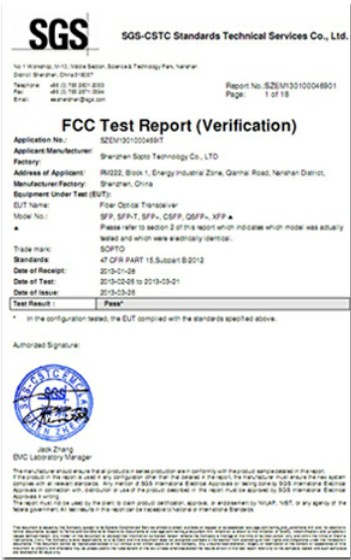
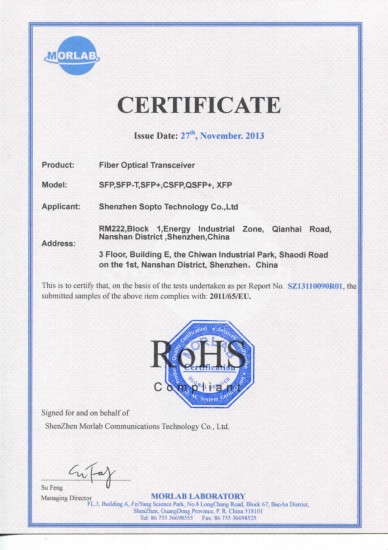
Certificate

Guarantee
Except products belongs to Bargain Shop section, all products are warranted by SOPTO only to purchasers for resale or for use in business or original equipment manufacturer, against defects in workmanship or materials under normal use (consumables, normal tear and wear excluded) for one year after date of purchase from SOPTO, unless otherwise stated...
Return Policies
Defective products will be accepted for exchange, at our discretion, within 14 days from receipt. Buyer might be requested to return the defective products to SOPTO for verification or authorized service location, as SOPTO designated, shipping costs prepaid. .....
Applications
Multiplexers can be used to connect PBX, Hot line and other devices of network from central site to user site through fiber optical cable.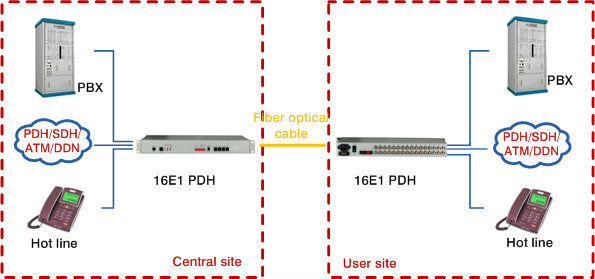
SNS Page


SOPTO Products
- Fiber Optic Transceiver Module
- High Speed Cable
- Fiber Optical Cable
- Fiber Optical Patch Cords
- Splitter CWDM DWDM
- PON Solution
- FTTH Box ODF Closure
- PCI-E Network Card
- Network Cables
- Fiber Optical Adapter
- Fiber Optical Attenuator
- Fiber Media Converter
- PDH Multiplexers
- Protocol Converter
- Digital Video Multiplexer
- Fiber Optical Tools
- Compatible
Related Products
Performance Feature
High integration desig
Low power consumption
Good EMC, EMI
Stable and Reliable
Multiplexer Knowledge
Recommended


Plesiochronous Transmission
Digital data and voice transmission is based on a 2.048Mbit/s bearer consisting of 30 time division multiplexed (TDM) voice channels, each running at 64Kbps (known as E1 and described by the CCITT G.703 specification). At the E1 level, timing is controlled to an accuracy of 1 in 1011 by synchronising to a master Caesium clock.
Increasing traffic over the past decade has demanded that more and more of these basic E1 bearers be multiplexed together to provide increased capacity. During this time rates have increased through 8, 34, and 140Mbit/s. The highest capacity commonly encountered today for inter-city fibre optic links is 565Mbit/s, with each link carrying 7,680 base channels, and now even this is insufficient.
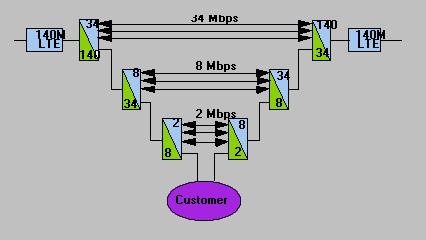
A typical Plesiochronous Drop & Insert
Unlike E1 2.048Mbit/s bearers, higher rate bearers in the hierarchy are operated plesiochronously, with tolerances on an absolute bit-rate ranging from 30ppm (parts per million) at 8Mbit/s to 15ppm at 140Mbit/s.
Multiplexing such bearers (known as tributaries in SDH speak) to a higher aggregate rate (e.g. 4 x 8Mbit/s to 1 x 34Mbit/s) requires the padding of each tributary by adding bits such that their combined rate together with the addition of control bits matches the final aggregate rate. Plesiochronous transmission is now often referred to as plesiochronous digital hierarchy (PDH).