-

- Sopto Home
-

- Special Topic
-
- Multiplexer Knowledge
-
- Features and advantages of SDH/SONET

Multiplexer Knowledge
- Why is Multiplexing Needed in Data Communication Systems?
- What is Concept of Multiplexing in Telephone System?
- What is Digital TV Frequency?
- Outlook of the WDM Networks
- DWDM Technical Overview
- CWDM Technical Overview
- How to Activate Cable Modems?
- How to Install a Fiber Optic Modem?
- How do I Choose a Best Fiber Modem?
SOPTO Special Topic
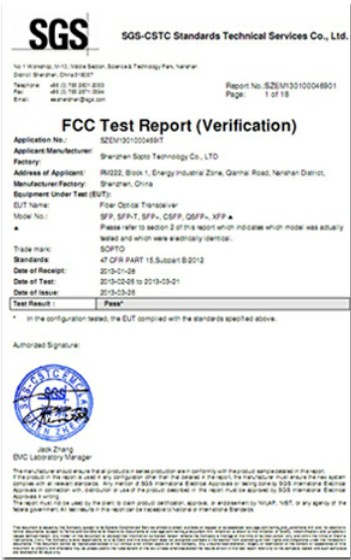
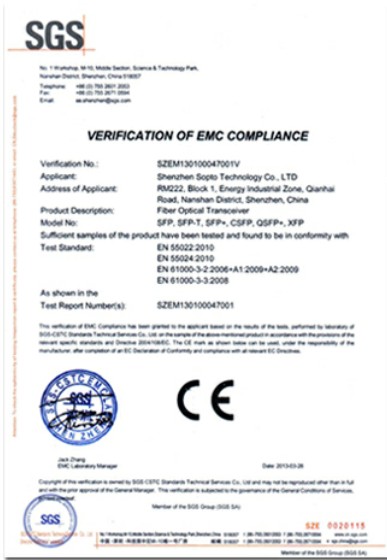
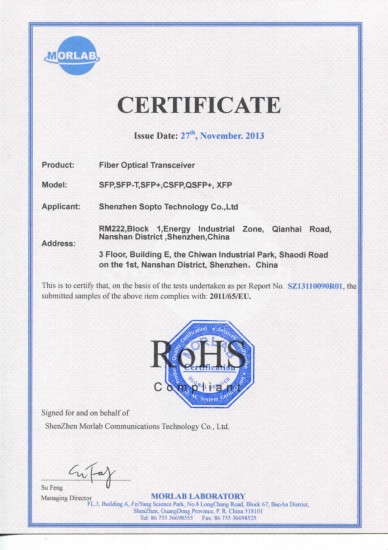
Certificate
Guarantee
Except products belongs to Bargain Shop section, all products are warranted by SOPTO only to purchasers for resale or for use in business or original equipment manufacturer, against defects in workmanship or materials under normal use (consumables, normal tear and wear excluded) for one year after date of purchase from SOPTO, unless otherwise stated...
Return Policies
Defective products will be accepted for exchange, at our discretion, within 14 days from receipt. Buyer might be requested to return the defective products to SOPTO for verification or authorized service location, as SOPTO designated, shipping costs prepaid. .....
Applications
Multiplexers can be used to connect PBX, Hot line and other devices of network from central site to user site through fiber optical cable.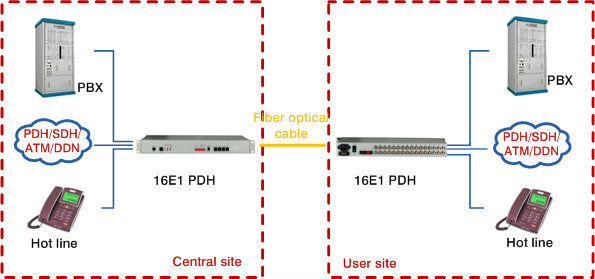
SNS Page


SOPTO Products
- Fiber Optic Transceiver Module
- High Speed Cable
- Fiber Optical Cable
- Fiber Optical Patch Cords
- Splitter CWDM DWDM
- PON Solution
- FTTH Box ODF Closure
- PCI-E Network Card
- Network Cables
- Fiber Optical Adapter
- Fiber Optical Attenuator
- Fiber Media Converter
- PDH Multiplexers
- Protocol Converter
- Digital Video Multiplexer
- Fiber Optical Tools
- Compatible
Related Products
Performance Feature
High integration desig
Low power consumption
Good EMC, EMI
Stable and Reliable
Multiplexer Knowledge
Recommended

Features and advantages of SDH/SONET
Today's carrier backbone networks are supported by synchronous optical network (SONET) and synchronous digital hierarchy (SDH) transmission technologies. SONET is the standard used in the United States and SDH is the standard used outside the United States.
SONET/SDH specification outlines the frame format, multiplexing method, and synchronization method between the equipment, as well as the specifying optical interface.
SONET/SDH will continue to play a key role in the next generation of networks for many carriers. In the core network, the carriers offer services such as telephone, dedicated leased lines, and Internet protocol (IP) data, which are continuously transmitted.
The individual data is not transmitted on separate lines; instead it is multiplexed into higher speeds and transmitted on SONET/SDH networks at up to 10 gigabits per second (Gbps). The following sections describe the need for SONET/SDH.
Synchronous Digital Transmission
Until the introduction of SONET in the mid-1980s, plesiochronous digital hierarchy (PDH) systems commonly used data multiplexing technology. The primary problem with PDH was that to extract low-speed traffic, all traffic that was multiplexed to higher speeds had to be de-multiplexed into lower speeds. With PDH, the equipment had to support multiplexing and de-multiplexing the signal, adding cost and complexity to the network.
SONET was introduced as a synchronous transmission system that could directly extract low-speed signals from multiplexed high-speed traffic. Based on the ANSI standard, the CCITT approved the international standard known as SDH based on the SONET technology.
Mid-Span Meet
The adoption and acceptance of SONET allowed carriers to be able to choose equipment from different vendors instead of using only a single vendor with a proprietary optical format. The ability to mix equipment from different vendors in one system is called the "Mid-Span Meet".
Speed
SONET and SDH give carriers much more bandwidth to carry voice and data traffic than PDH technology. The base rate for SONET is 51 Mbps. Synchronous transport signal (STS-n) refers to the SONET signal in the electrical domain, and optical carrier (OC-n) refers to the SONET signal in the optical domain. The base rate for SDH is 155 Mbps. Synchronous transport module (STM-n) refers to the SDH signal level in both the electrical and optical domains. See Table 1.
|
Table 1. Synchronous Transport Signal (STS) & Synchronous Transport Module (STM) |
|||
|
SONET |
SONET |
SDH |
Both |
|
North America STS Level |
North America OC Level |
European STM Level |
Line Rates (Mbps) |
|
STS-1 |
OC-1 |
N/A |
51.84 |
|
STS-3 |
OC-3 |
STM-1 |
155.52 |
|
STS-12 |
OC-12 |
STM-4 |
622.08 |
|
STS-48 |
OC-48 |
STM-16 |
2,488.32 |
|
STS-192 |
OC-192 |
STM-64 |
9,953.28 |
|
STS-768 |
OC-768 |
STM-256 |
39,813.12 |
Reliability
Carriers require an extremely reliable network and cannot afford downtime. Therefore, most SONET/SDH networks have a ring structure, which adds high reliability to the overall transmission network. Even if the optical fiber is cut, the transmission path is backed-up and restored within 50 ms. Figure 1 shows an example SONET ring.
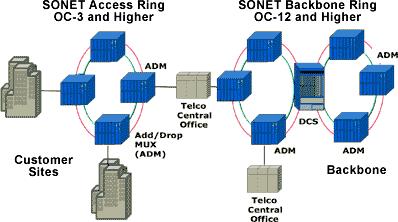
Figure 1. SONET Rings
A SONET/SDH transmission network is composed of several pieces of equipment, including:
- Terminal multiplexer (TM)
- Add-drop multiplexer (ADM)
- Repeater
- Digital cross-connect system (DCS)