-

- Sopto Home
-

- Special Topic
-
- Multiplexer Knowledge
-
- Future of Optical Transport Network

Multiplexer Knowledge
- Why is Multiplexing Needed in Data Communication Systems?
- What is Concept of Multiplexing in Telephone System?
- What is Digital TV Frequency?
- Outlook of the WDM Networks
- DWDM Technical Overview
- CWDM Technical Overview
- How to Activate Cable Modems?
- How to Install a Fiber Optic Modem?
- How do I Choose a Best Fiber Modem?
SOPTO Special Topic
Certificate
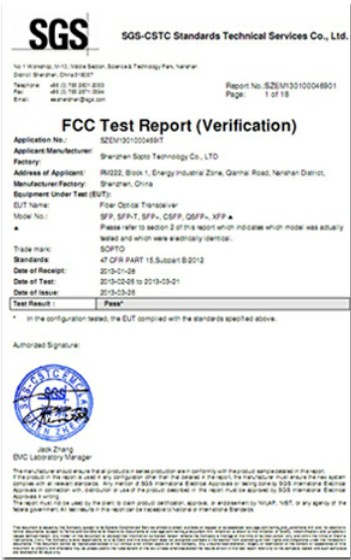

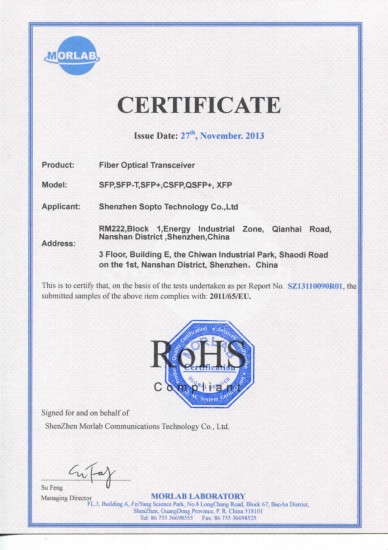
Guarantee
Except products belongs to Bargain Shop section, all products are warranted by SOPTO only to purchasers for resale or for use in business or original equipment manufacturer, against defects in workmanship or materials under normal use (consumables, normal tear and wear excluded) for one year after date of purchase from SOPTO, unless otherwise stated...
Return Policies
Defective products will be accepted for exchange, at our discretion, within 14 days from receipt. Buyer might be requested to return the defective products to SOPTO for verification or authorized service location, as SOPTO designated, shipping costs prepaid. .....
Applications
Multiplexers can be used to connect PBX, Hot line and other devices of network from central site to user site through fiber optical cable.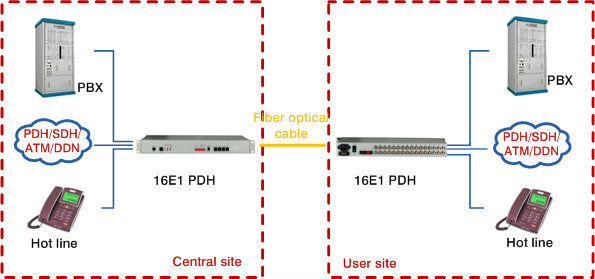
SNS Page


SOPTO Products
- Fiber Optic Transceiver Module
- High Speed Cable
- Fiber Optical Cable
- Fiber Optical Patch Cords
- Splitter CWDM DWDM
- PON Solution
- FTTH Box ODF Closure
- PCI-E Network Card
- Network Cables
- Fiber Optical Adapter
- Fiber Optical Attenuator
- Fiber Media Converter
- PDH Multiplexers
- Protocol Converter
- Digital Video Multiplexer
- Fiber Optical Tools
- Compatible
Related Products
Performance Feature
High integration desig
Low power consumption
Good EMC, EMI
Stable and Reliable
Multiplexer Knowledge
Recommended


Future of Optical Transport Network
The deployment of OTN has primarily been for the transport of SDH and 10GE signals. Many recent changes to the OTN standards have broadened functionality to support 40- and 100-Gbit/s operation and added better capability for Gigabit Ethernet and other protocols such as Fibre Channel and video.
While there is certainly a market for multiplexing and transporting many low-rate signals (<10 Gbits/s), most OTN deployment will be in the core of the transport network and continue to focus on large-bandwidth pipes.
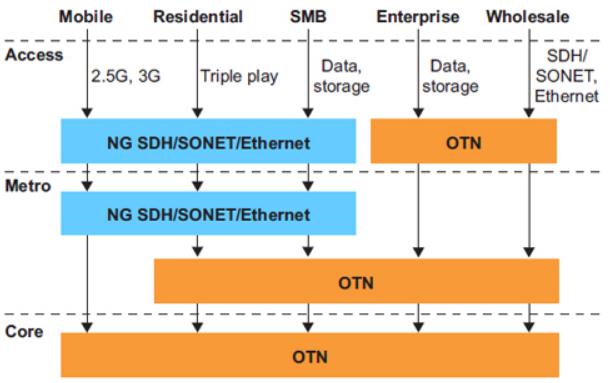
Today’s OTN
The introduction of OTN switching through development of P-OTS equipment delivers the true networking aspect of OTN and enables a wider set of deployment scenarios and protection options in the network. Despite the linear and ring orientation of SDH networks, it is likely that deployment of OTN equipment will be more focused around a meshed network approach. The planned integration of packet switching capability with OTN switching in P-OTS equipment may also have a significant effect on how OTN equipment is deployed.
While OTN has taken many elements from previous network technologies such as PDH and SDH, it is certainly a significant evolutionary step in transport technology. Service providers around the world have committed to OTN as their transport technology of choice, and much time and energy is being spent on developing new equipment to enable a greatly expanded rollout of OTN into the service provider networks.