-

- Sopto Home
-

- Special Topic
-
- Multiplexer Knowledge
-
- Origins of SONET

Multiplexer Knowledge
- Why is Multiplexing Needed in Data Communication Systems?
- What is Concept of Multiplexing in Telephone System?
- What is Digital TV Frequency?
- Outlook of the WDM Networks
- DWDM Technical Overview
- CWDM Technical Overview
- How to Activate Cable Modems?
- How to Install a Fiber Optic Modem?
- How do I Choose a Best Fiber Modem?
SOPTO Special Topic
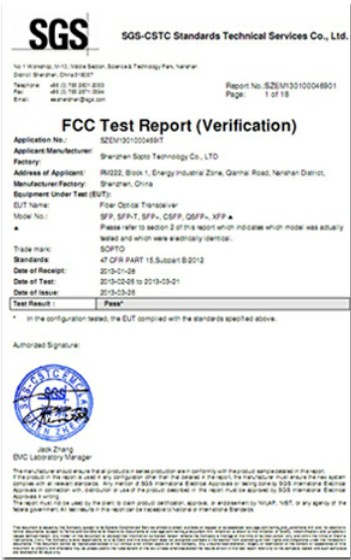
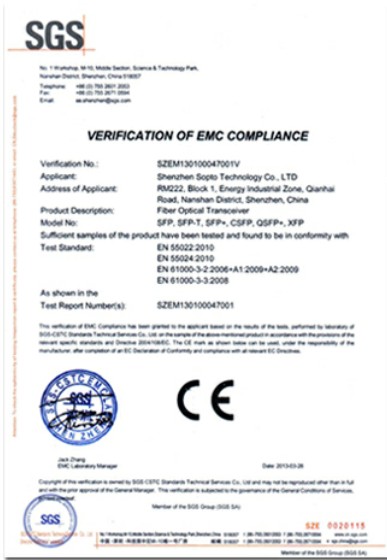
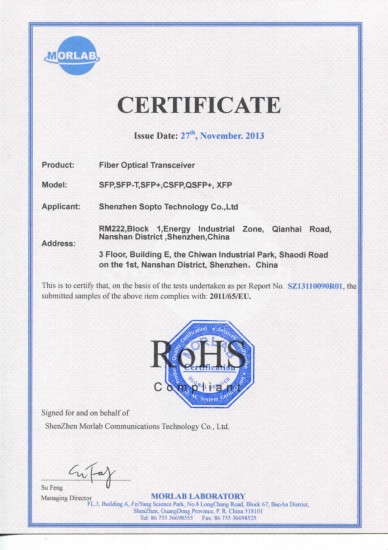
Certificate
Guarantee
Except products belongs to Bargain Shop section, all products are warranted by SOPTO only to purchasers for resale or for use in business or original equipment manufacturer, against defects in workmanship or materials under normal use (consumables, normal tear and wear excluded) for one year after date of purchase from SOPTO, unless otherwise stated...
Return Policies
Defective products will be accepted for exchange, at our discretion, within 14 days from receipt. Buyer might be requested to return the defective products to SOPTO for verification or authorized service location, as SOPTO designated, shipping costs prepaid. .....
Applications
Multiplexers can be used to connect PBX, Hot line and other devices of network from central site to user site through fiber optical cable.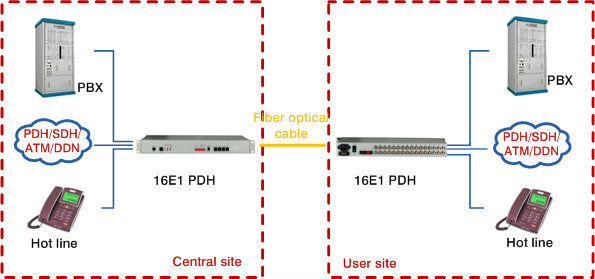
SNS Page


SOPTO Products
- Fiber Optic Transceiver Module
- High Speed Cable
- Fiber Optical Cable
- Fiber Optical Patch Cords
- Splitter CWDM DWDM
- PON Solution
- FTTH Box ODF Closure
- PCI-E Network Card
- Network Cables
- Fiber Optical Adapter
- Fiber Optical Attenuator
- Fiber Media Converter
- PDH Multiplexers
- Protocol Converter
- Digital Video Multiplexer
- Fiber Optical Tools
- Compatible
Related Products
Performance Feature
High integration desig
Low power consumption
Good EMC, EMI
Stable and Reliable
Multiplexer Knowledge
Recommended
Origins of SONET
SONET was created by the ECSA (Exchange Carriers Standard Association) to allow a standardized and normalized connection between fibre optic systems, even though different manufacturers had designed them. SONET was designed to allow world telephone networks to interconnect globally between them. By the end of the 90s, SONET/SDH standards were able to support global transport infrastructures for the next three decades to come.
SONET and SDH, which are essentially the same, were originally designed to transport circuit mode communications (e.g., DS1, DS3) from a variety of different sources, but they were primarily designed to support real-time, uncompressed, circuit-switched voice encoded in PCM format. The primary difficulty in doing this prior to SONET/SDH was that the synchronization sources of these various circuits were different.
This meant that each circuit was actually operating at a slightly different rate and with different phase. SONET/SDH allowed for the simultaneous transport of many different circuits of differing origin within a single framing protocol. SONET/SDH is not itself a communications protocol per se, but a transport protocol.