-

- Sopto Home
-

- Special Topic
-
- Patch Cord Knowledge
-
- Patch Cable and Wiring Loom

Patch Cord Knowledge
- Fiber Optic Connector Ferrule Design
- Fiber Optic Connector Design
- E2000 to ST Fiber Patch Cable Overview
- Acceptable and Unacceptable Fiber Connector End-Face Finishes
- Using Wipes and Cleaning Cassettes to Clean Fiber Patch Cords
- Not-Too-Tight Mating of Fiber Optic Connectors
- Matching Gel and Oils Contamination about Fiber Optic Connectors
- The Effect of Improper Use of Fiber Optic Connectors
- Why Fiber Optic Connectors are Fragile?
SOPTO Special Topic
Certificate
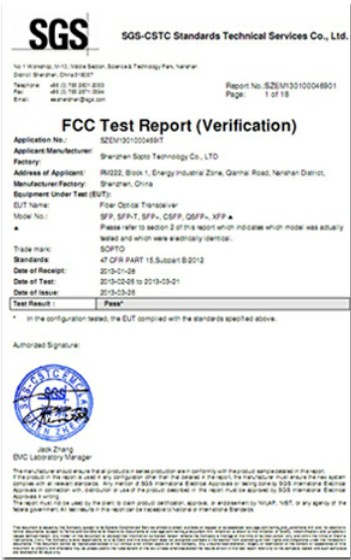
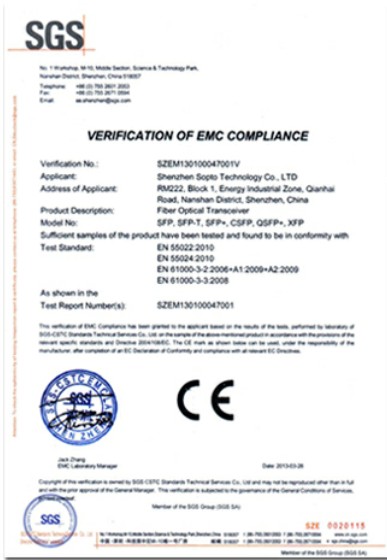
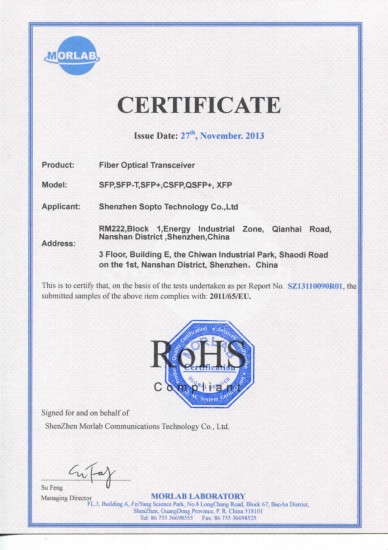
Guarantee
Except products belongs to Bargain Shop section, all products are warranted by SOPTO only to purchasers for resale or for use in business or original equipment manufacturer, against defects in workmanship or materials under normal use (consumables, normal tear and wear excluded) for one year after date of purchase from SOPTO, unless otherwise stated...
Return Policies
Defective products will be accepted for exchange, at our discretion, within 14 days from receipt. Buyer might be requested to return the defective products to SOPTO for verification or authorized service location, as SOPTO designated, shipping costs prepaid. .....
Applications
 Fiber Patch Cords have a widely application. Where the need for the optical fiber connection, where you need fiber optic patch cords.
Testing Equipment
FTTX+ LAN
Optical Fiber CATV
Optical Communication System
Telecommunication
SNS Page


SOPTO Products
- Fiber Optic Transceiver Module
- High Speed Cable
- Fiber Optical Cable
- Fiber Optical Patch Cords
- Splitter CWDM DWDM
- PON Solution
- FTTH Box ODF Closure
- PCI-E Network Card
- Network Cables
- Fiber Optical Adapter
- Fiber Optical Attenuator
- Fiber Media Converter
- PDH Multiplexers
- Protocol Converter
- Digital Video Multiplexer
- Fiber Optical Tools
- Compatible
Related Products
Performance Feature
Good Water-proof
Low insertion loss;
low reflection loss;
Stability, good repeatability;
High-precision ceramic ferrule;
Compatible with NTT standard;
Precision Grinding and fully testing;
Compliance with international standards
Patch Cord Knowledge
Recommended


Patch Cable and Wiring Loom
A patch cable, also called a patch cord, is an electrical or optical cable used to connect used to connect (“patch-in”) one electronic or optical device to another for signal routing. Devices of different types (e.g., a switch connected to a computer, or a switch to a router) are connected with patch cables. Patch cables are usually produced in many different colors so as to be easily distinguishable, and are relatively short, perhaps no longer than two meters. Types of patch cables include microphone cables, headphone extension cables, XLR connector, Tiny Telephone (TT) connector, RCA connector and TRS phone connector cables (as well as modular Ethernet cables), and thicker, hose-like cords (snake cable) used to carry video or amplified signals.
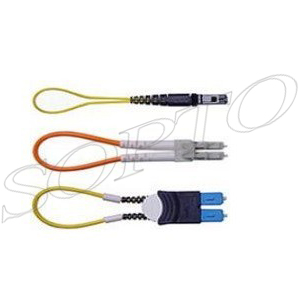
Among all the patch cables, the fiber optic patch cable is the most popular one. It is a fiber optic cable that can be directly connected to other equipment for connecting and managing convenience. It is used for making patch cords from equipment to fiber optic cabling. Having a thick layer of protection, it is used to connect the optical transmitter, receiver and the terminal box. Its core has a high refractive index, used for transmitting light.
The coating has low refractive index, to reflect light back into the core. The jacket protects the interior. It is widely used in communication room, FTTH (Fiber to The Home), LAN (Local Area Network), FOS (fiber optic sensor), fiber optic communication system, optical fiber connected and transmitted equipment, defense combat readiness, etc, with the characteristics of low Insertion Loss, high Return Loss, good Repeatability, good Interchange, excellent environmental adaptability. The connectors of fiber optic cables are various, like FC, SC, ST, LC, MTRJ, MU and E2000. We can make either two of them together according to customers, need.
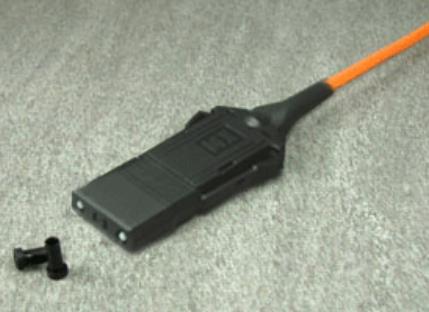
Wire loom is a flexible, tube-shaped product that installs over bundles of wires to keep them neat, organized, and protected from abrasion and other damage. Also known as corrugated tubing, wire loom has a ridged surface that lets it bend easily, but also gives it extra strength. Wire loom is generally slit along its length, making it easy for users to insert and remove cables, but there are also a few unsplit varieties available, which can be used as a type of flexible conduit when extra cable protection is needed.
To use wire loom, simply slip cables in through the side slit – this can be done by hand, or with a wire loom tool, which folds around cable bundles and helps you “zip” them into place in just seconds. Cables are equally easy to remove, which makes wire loom perfect for use in situations that call for frequent cable updates and reconfigurations. Wire loom is extremely versatile, and can be used at home (to prevent small children and pets from chewing on power cords) or at the office (to organize and conceal the computer cables under your desk). There’s even chrome automotive wire loom, which is used to protect and add some custom aftermarket shine to engine bay and motorcycle cables.
For more information, please browse our website or contact a Sopto representative by calling 86-755-36946668, or by sending an email to info@sopto.com.