-

- Sopto Home
-

- Special Topic
-
- Converter Knowledge
-
- 100Base-SX between Fiber Optical Cables and Fiber Media Converte

Converter Knowledge
- Form Factors and Application of Ethernet Media Converter
- Ethernet over 4 E1 Converter Brief Introduction
- What is the Difference between RS232 and RS485 Serial Interfaces
- What is the Difference between RS232 and RS485 Serial Interfaces
- How to Convert an Analog Telephone to VoIP Protocol?
- How to Find the Internet Protocol Address and Media Access Contr
- How to Convert from Fast Ethernet to Fiber Optics?
- How to Connect a Fiber Converter?
- How to Convert Ethernet to Fiber Media Converters?
SOPTO Special Topic
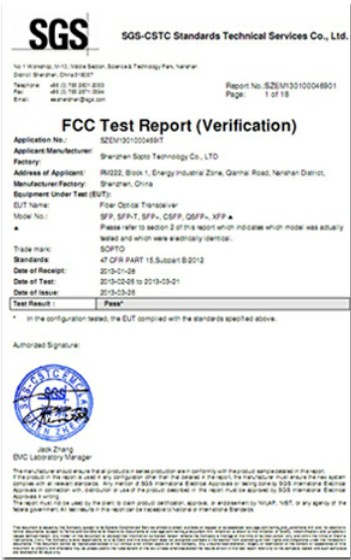
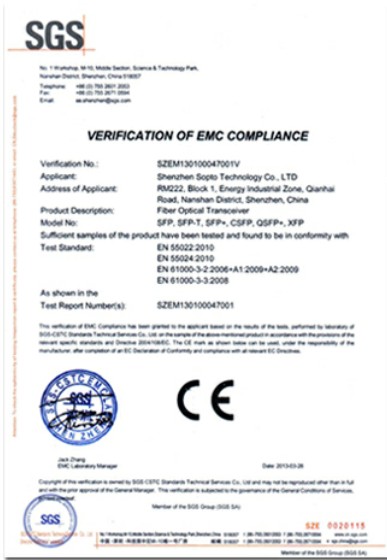
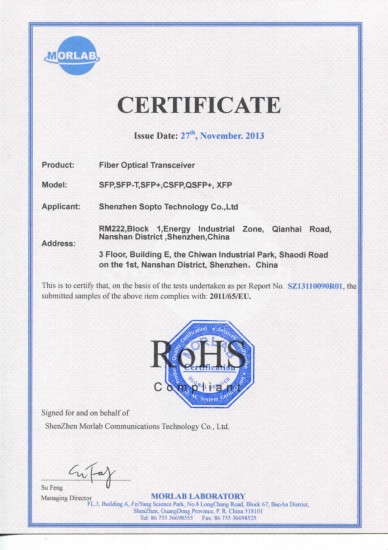
Certificate
Guarantee
Except products belongs to Bargain Shop section, all products are warranted by SOPTO only to purchasers for resale or for use in business or original equipment manufacturer, against defects in workmanship or materials under normal use (consumables, normal tear and wear excluded) for one year after date of purchase from SOPTO, unless otherwise stated...
Return Policies
Defective products will be accepted for exchange, at our discretion, within 14 days from receipt. Buyer might be requested to return the defective products to SOPTO for verification or authorized service location, as SOPTO designated, shipping costs prepaid. .....
Applications
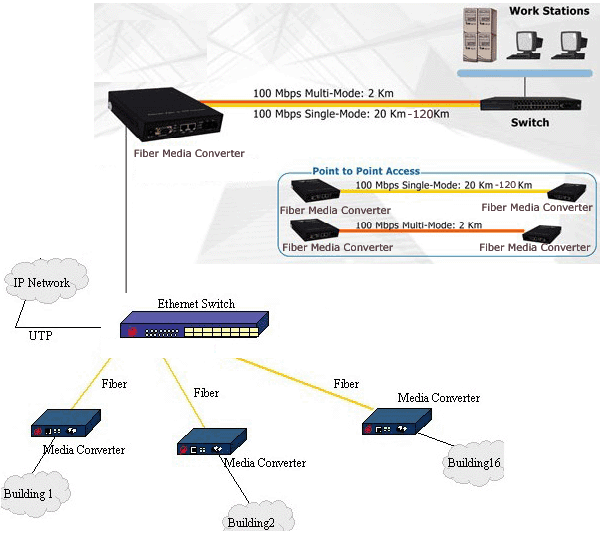
An Ethernet to Fiber Media Converter can also be used where there is high level of electromagnetic interference or EMI which is a common phenomenon found in industrial plants. This interference can cause corruption of data over copper-based ethernet links. Data transmitted over fiber optic cable however is completely immune to this type of noise. An Ethernet to Fiber Optic Converter therefore enables you to inter-connect your copper-ethernet devices over fiber ensuring optimal data transmission across the plant floor.
SNS Page


SOPTO Products
- Fiber Optic Transceiver Module
- High Speed Cable
- Fiber Optical Cable
- Fiber Optical Patch Cords
- Splitter CWDM DWDM
- PON Solution
- FTTH Box ODF Closure
- PCI-E Network Card
- Network Cables
- Fiber Optical Adapter
- Fiber Optical Attenuator
- Fiber Media Converter
- PDH Multiplexers
- Protocol Converter
- Digital Video Multiplexer
- Fiber Optical Tools
- Compatible
Related Products
Performance Feature
Converter Knowledge
Recommended
100Base-SX between Fiber Optical Cables and Fiber Media Converters
The establishment of the 100Base-SX standard by the TIA-formally titled the TIA/EIA-785 100 Mbit/sec Physical Layer Dependent Sub-layer and 10 Mbit/sec and 100 Mbit/sec Auto-Negotiation on 850-nm Short Wavelength-opened new opportunities for users to deploy horizontal fiber. The "Short-Wavelength Fast Ethernet" specifications, as they have been called, allow users to migrate from 10 to 100 Mbits/sec over multimode fiber using 850-nm optics.
The standard supports a multimode cable distance of 300 meters-an optimum length for horizontal applications. It was based on a model that used worst-case values and assumptions, such as the use of 62.5-µm fiber with 160 MHz·km bandwidth. In reality, most 100Base-SX equipment will support a distance of 500 meters if good quality multimode fiber is in the link.
Media converters can be a crucial part of the implementation of TIA/EIA-785 and, therefore, a key component in a user's migration path to higher speeds over multimode fiber. Advances in media conversion technology, coupled with the recent release of the 785 standard, make it more realistic than ever for users to do exactly that.
Most media converters are designed to be application-specific, meaning the converter will support only one or at most two similar applications. For example, a media converter may support 10 Mbit/sec Ethernet (converting 10Base-T to 10Base-FL), 100 Mbit/sec Ethernet (100Base-TX to 100Base-FX), or 10/100 Mbit/sec Ethernet (100Base-SX, dual protocol 10/100 Mbit-sec Ethernet).
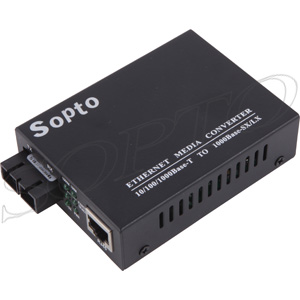
10M/100M/1000M Gigabit Media Converter
The primary reason that media converters are application-specific is the technical complexity required for each application-and the associated cost to handle multiple applications in one media-converter unit. Considering the significant differences in copper and fiber application protocols, and in optical transmitter and detectors, multiple applications can escalate the cost of a media converter.
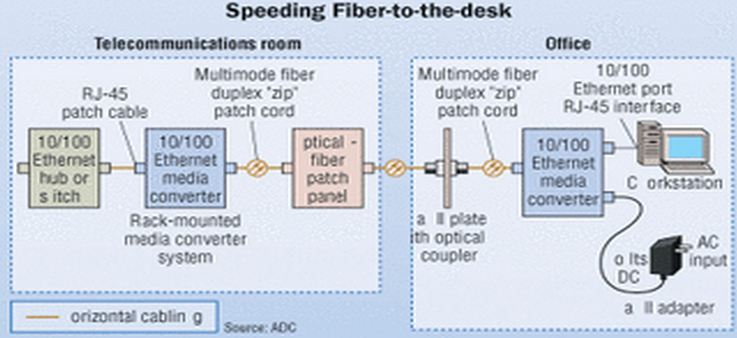
Speeding Fiber-to-the-Desk
Take, as an example, the user who must set up a 10 Mbit/sec Ethernet link to a microcontroller on a factory floor. The nearest telecommunications room is 450 meters away. The microcontroller has a built-in Ethernet port and spare Ethernet switch ports available in the TR. The solution: Use multimode fiber and a media converter on each end of the link. The choice of media converters comes down to economics: pay $140 for two 10-Mbit/sec converters, or pay $1,800 for a do-it-all converter that supports 10, 100, and 1000 Mbit/sec Ethernet over either multimode or single mode fiber.
Single-application media converters mean a simpler product design, reduced development overhead, quicker time to market, and easier field deployment. In short, single-application drives costs down.
Sopto supplies high quality fiber media converters with reasonable price. For the newest quotes, please contact a Sopto representative by calling 86-755-36946668, or by sending an email to info@sopto.com. For more info, please browse our website.