-

- Sopto Home
-

- Special Topic
-
- Patch Cord Knowledge
-
- Why do We Run LSZH Cable?

Patch Cord Knowledge
- Fiber Optic Connector Ferrule Design
- Fiber Optic Connector Design
- E2000 to ST Fiber Patch Cable Overview
- Acceptable and Unacceptable Fiber Connector End-Face Finishes
- Using Wipes and Cleaning Cassettes to Clean Fiber Patch Cords
- Not-Too-Tight Mating of Fiber Optic Connectors
- Matching Gel and Oils Contamination about Fiber Optic Connectors
- The Effect of Improper Use of Fiber Optic Connectors
- Why Fiber Optic Connectors are Fragile?
SOPTO Special Topic
Certificate
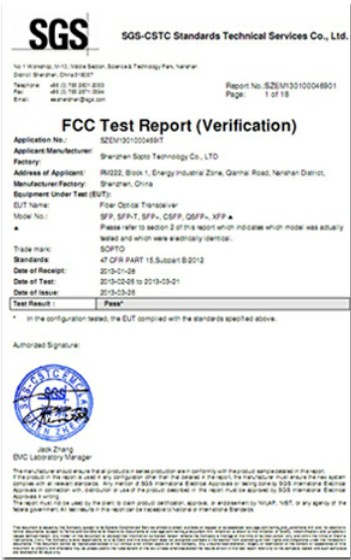
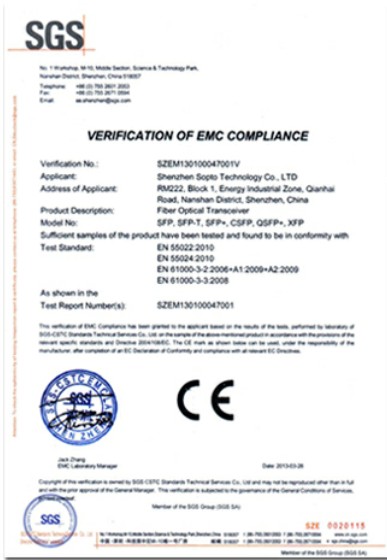
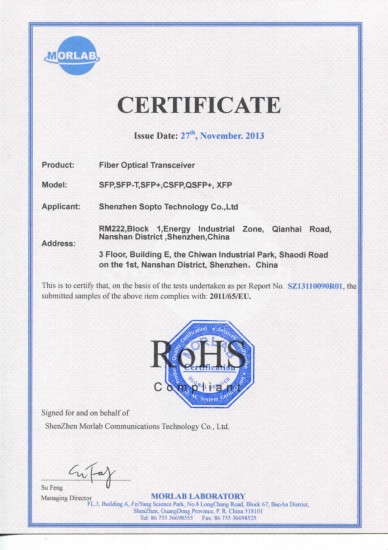
Guarantee
Except products belongs to Bargain Shop section, all products are warranted by SOPTO only to purchasers for resale or for use in business or original equipment manufacturer, against defects in workmanship or materials under normal use (consumables, normal tear and wear excluded) for one year after date of purchase from SOPTO, unless otherwise stated...
Return Policies
Defective products will be accepted for exchange, at our discretion, within 14 days from receipt. Buyer might be requested to return the defective products to SOPTO for verification or authorized service location, as SOPTO designated, shipping costs prepaid. .....
Applications
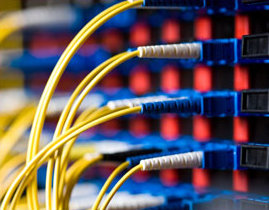 Fiber Patch Cords have a widely application. Where the need for the optical fiber connection, where you need fiber optic patch cords.
Testing Equipment
FTTX+ LAN
Optical Fiber CATV
Optical Communication System
Telecommunication
SNS Page


SOPTO Products
- Fiber Optic Transceiver Module
- High Speed Cable
- Fiber Optical Cable
- Fiber Optical Patch Cords
- Splitter CWDM DWDM
- PON Solution
- FTTH Box ODF Closure
- PCI-E Network Card
- Network Cables
- Fiber Optical Adapter
- Fiber Optical Attenuator
- Fiber Media Converter
- PDH Multiplexers
- Protocol Converter
- Digital Video Multiplexer
- Fiber Optical Tools
- Compatible
Related Products
Performance Feature
Good Water-proof
Low insertion loss;
low reflection loss;
Stability, good repeatability;
High-precision ceramic ferrule;
Compatible with NTT standard;
Precision Grinding and fully testing;
Compliance with international standards
Patch Cord Knowledge
Recommended
Why do We Run LSZH Cable?
If you have concerns on why do we have to run LSZH cables in some special networking cabling environment, In this article, we will explain a little about what halogens are, what’s the difference between PVC and LSZH cable, and why do we have to run the LSZH cables. What halogens are?
A halogen is a nonmetallic element, such as fluorine, chlorine, iodine, or bromine. When exposed to flames, substances made with halogens give off toxic fumes that quickly harm the eyes, nose, lungs, and throat. Did you notice that fluorine and chlorine are commonly found in cable insulation and jackets? Even when cables are designed to be flame-resistant, any cable when exposed to high enough temperatures will melt and burn. PVC cables contain chlorine, which emits toxic fumes when burned.
.jpg)
LSZH cables are popular outside the United States. Some safety advocates are calling for the use of LSZH cables in the United States, specifically for the plenum space. Review your local building codes to determine if you must use LSZH cable. Non-LSZH cables will produce corrosive acids if they are exposed to water (such as from a sprinkler system) when burned; such acids may theoretically further endanger equipment. But many opponents of LSZH cable reason that if an area of the building is on fire, the equipment will be damaged by flames before it is damaged by corrosives from a burning cable.
Why, you might ask, would anyone in his or her right mind argue against the installation of LSZH cables everywhere? First, reducing toxic fumes doesn’t necessarily mean the cable is more fire-proof.
The flame-spread properties are worse than for cables in use today. Numerous studies by Bell Labs showed that cables composed of LSZH will not pass the plenum test, not because of smoke generation but because of flame spread. Most Low Smoke cables designs will only pass the riser test where the allowable flame spread is greater. Second, consider practicality. LSZH is an expensive solution to a problem that doesn’t seem to really exist in the United States.
Our fiber optic cables and patch cables are LSZH Cables. For purchasing high quality LSZH cables with low cost or for more products’ information, please contact a Sopto representative by calling 86-755-36946668, or by sending an email to info@sopto.com.