-

- Sopto Home
-

- Special Topic
-
- Fiber Optics knowledge
-
- Fiber and Bandwidth within a Data Center

Fiber Optics knowledge
- Maintained Methods of Fusion Splicer Parts
- How to Use the Fiber Optic Cleaver?
- What are Fixed Attenuators & Variable Attenuators?
- Deployable Fiber Optic Systems for Harsh Mining Environments
- Developing Miniature Fiber Optic Cable Has Become the Trend
- Fiber Optic Cleaning Procedures
- 6 Steps to Selecting a Fiber Optic Cable
- Signal Attenuation Introduction
- How Fiber Transmission Works?
SOPTO Special Topic
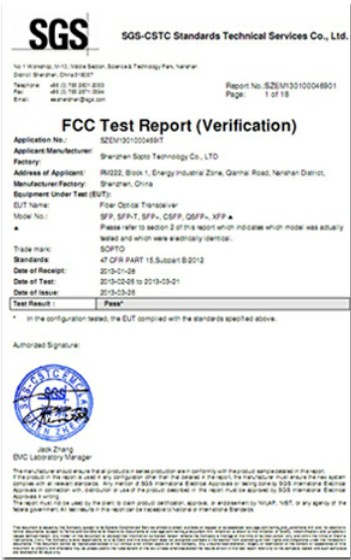
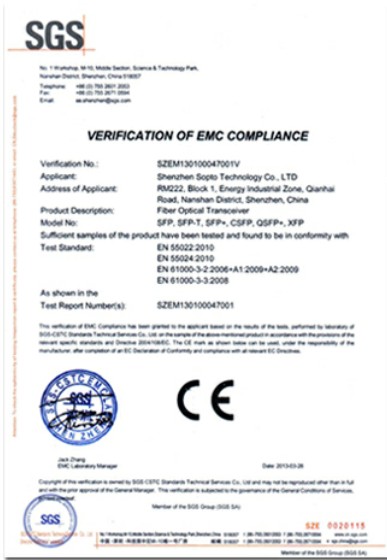
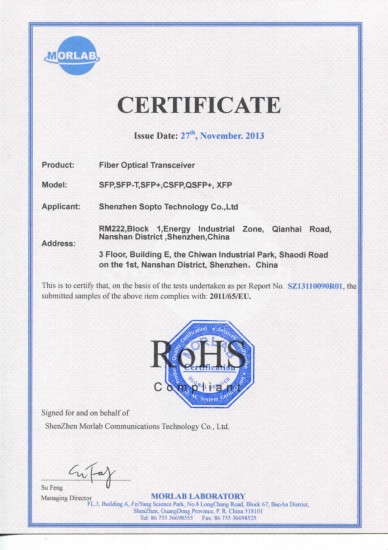
Certificate
Guarantee
Except products belongs to Bargain Shop section, all products are warranted by SOPTO only to purchasers for resale or for use in business or original equipment manufacturer, against defects in workmanship or materials under normal use (consumables, normal tear and wear excluded) for one year after date of purchase from SOPTO, unless otherwise stated...
Return Policies
Defective products will be accepted for exchange, at our discretion, within 14 days from receipt. Buyer might be requested to return the defective products to SOPTO for verification or authorized service location, as SOPTO designated, shipping costs prepaid. .....
Applications
Fiber Optis can be used in so many fields:
Data Storage Equipment
Interconnects,Networking
Gigabit Ethernet
FTTx, HDTV,CATV
Aerospace & Avionics
Data Transfer Tests
Network Equipment
Broadcast Automotive
Electronics,Sensing
Oil & Gas, Imaging
Outside Plant,Central Office
Harsh Environment
Data Transmission
Illumination,Institutions
Ship to Shore,Education
Simulation,Military,Space
Unmanned Aerial Vehicles
Semiconductor Equipment
Diagnostics & Troubleshooting
Premise Networks Carrier Networks
Independent Telecommunication Providers
SNS Page


SOPTO Products
- Fiber Optic Transceiver Module
- High Speed Cable
- Fiber Optical Cable
- Fiber Optical Patch Cords
- Splitter CWDM DWDM
- PON Solution
- FTTH Box ODF Closure
- PCI-E Network Card
- Network Cables
- Fiber Optical Adapter
- Fiber Optical Attenuator
- Fiber Media Converter
- PDH Multiplexers
- Protocol Converter
- Digital Video Multiplexer
- Fiber Optical Tools
- Compatible
Related Products
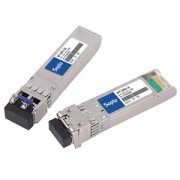 10G SFP+ Transceiver
 40G QSFP+ Transceiver
Performance Feature
Fiber Optics knowledge
Recommended
Fiber and Bandwidth within a Data Center
What fiber you use in a data center is determined by the amount of bandwidth your high-speed network requires. Sometimes, it may be necessary to mix newer, higher-speed fiber with older, previously installed fibers.
What is Bandwidth?
Bandwidth is the total amount of data that can be transmitted down a fiber.
Maximum Bandwidths of Different Multimode Fibers
- OM1 – 62.5 um Core – 10GBit up to 33 meters
- OM2 – 50 um Core – 10GBit up to 82 meters
- OM3 – 50 um Core, Laser Optimized – 10GBit up to 300 meters
- OM4 – 50 um Core, Laser Optimized – 10GBit up to 550 meters
What are the Main Differences?
- OM1 contains the only fiber with a 62.5um core and has the lowest bandwidth capacity.
- The major difference between OM2 and OM3 fiber patch cords is that OM3 fibers by design is (laser) optimized, allowing data to transmit further.
- OM4 fibers are capable of transporting 10GBit data the furthest.
Additional Bandwidth Options
With a greater demand for higher bandwidth, extensions of IEEE 802.3 standards have emerged. Growing in popularity are 12-fiber MPO-style connectors. These newer protocols allow OM3 and OM4 fiber jumpers to operate at either 40Gb or 100Gb per second. Rather than using traditional serial transmission as a LC or SC connector would, these MPO connectors operate using parallel optics transmission (lanes). By transmitting 10Gb per fiber (lane) of the ribbon fiber, the higher bandwidths are achieved.
For more information, please browse our website.