-

- Sopto Home
-

- Special Topic
-
- Patch Cord Knowledge
-
- What do Cat5e, Cat6, and Cat6a have in common?

Patch Cord Knowledge
- Fiber Optic Connector Ferrule Design
- Fiber Optic Connector Design
- E2000 to ST Fiber Patch Cable Overview
- Acceptable and Unacceptable Fiber Connector End-Face Finishes
- Using Wipes and Cleaning Cassettes to Clean Fiber Patch Cords
- Not-Too-Tight Mating of Fiber Optic Connectors
- Matching Gel and Oils Contamination about Fiber Optic Connectors
- The Effect of Improper Use of Fiber Optic Connectors
- Why Fiber Optic Connectors are Fragile?
SOPTO Special Topic
Certificate
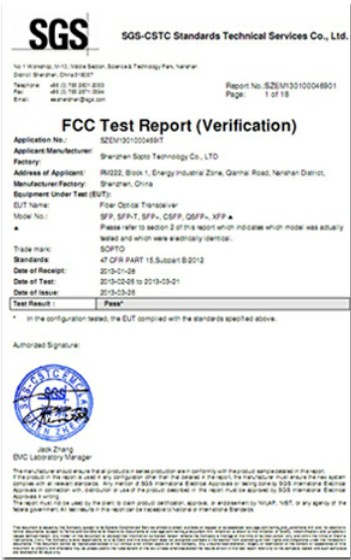
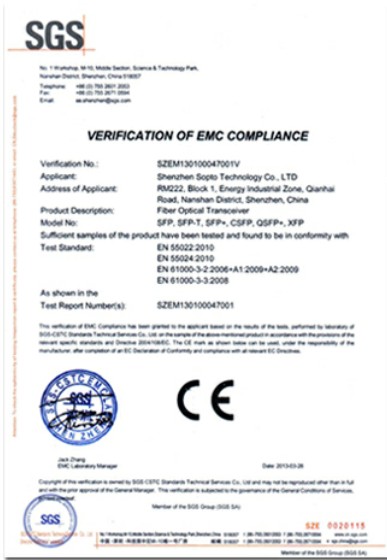
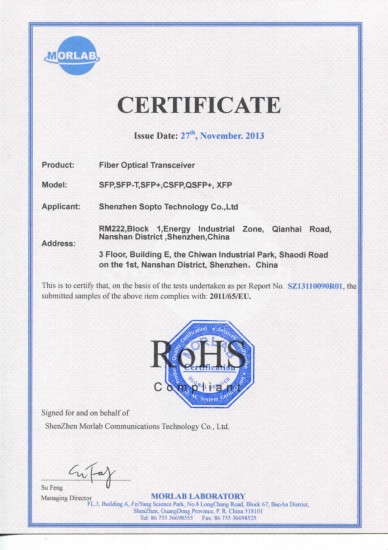
Guarantee
Except products belongs to Bargain Shop section, all products are warranted by SOPTO only to purchasers for resale or for use in business or original equipment manufacturer, against defects in workmanship or materials under normal use (consumables, normal tear and wear excluded) for one year after date of purchase from SOPTO, unless otherwise stated...
Return Policies
Defective products will be accepted for exchange, at our discretion, within 14 days from receipt. Buyer might be requested to return the defective products to SOPTO for verification or authorized service location, as SOPTO designated, shipping costs prepaid. .....
Applications
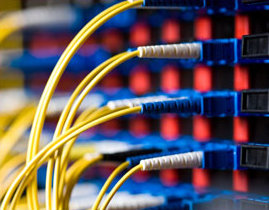 Fiber Patch Cords have a widely application. Where the need for the optical fiber connection, where you need fiber optic patch cords.
Testing Equipment
FTTX+ LAN
Optical Fiber CATV
Optical Communication System
Telecommunication
SNS Page


SOPTO Products
- Fiber Optic Transceiver Module
- High Speed Cable
- Fiber Optical Cable
- Fiber Optical Patch Cords
- Splitter CWDM DWDM
- PON Solution
- FTTH Box ODF Closure
- PCI-E Network Card
- Network Cables
- Fiber Optical Adapter
- Fiber Optical Attenuator
- Fiber Media Converter
- PDH Multiplexers
- Protocol Converter
- Digital Video Multiplexer
- Fiber Optical Tools
- Compatible
Related Products
Performance Feature
Good Water-proof
Low insertion loss;
low reflection loss;
Stability, good repeatability;
High-precision ceramic ferrule;
Compatible with NTT standard;
Precision Grinding and fully testing;
Compliance with international standards
Patch Cord Knowledge
Recommended
What do Cat5e, Cat6, and Cat6a have in common?
They each utilize 4 twisted pairs in a common jacket. They use the same style RJ-45 jacks and plugs. And, they are each limited to a cable length of 100 meters including the length of the patch cables on either end of the link. The parts are interchangeable, so you can use a Cat5e patch cable with Cat6 house cabling. Your system will just perform at the level of the lowest link, in this case, the Cat5e patch cable.
So what’s the difference?
Better transmission performance. With each upgrade in cable, there is less signal loss, less cross talk, and more bandwidth. And of course, more cost. So the important question is: What exactly am I getting for my money? Rather than talk about near-end-cross-talk requirements or SNR ratios, let’s talk about what each cable delivers in terms of Ethernet performance.
Cat5e: 1 Gigabit Ethernet up to 100 meters 10 Gigabit Ethernet up to 45 meters
Cat6: 1 Gigabit Ethernet up to 100 meters 10 Gigabit Ethernet up to 55 meters
Cat6a: 1 Gigabit Ethernet up to 100 meters 10 Gigabit Ethernet up to 100 meters
All three support gigabit, which is enough for most networks. 10 Gigabit, when it is deployed, is typically utilized for aggregation links between switches and not for workstations. Although it is unlikely an enterprise will require 10 gigabit to the workstations, certainly it is reasonable to design a new system with future needs in mind. In this case, the 10 gigabit capacities of Cat5e and Cat6 are problematic. Since data closets are located based on an assumption that workstation lines can be up to 100 meters, the shorter length limitation for Cat5e and Cat6 make them undesirable. That leaves Cat6a as the cabling of choice for future proofing.
So which cable should I use again?
Cat5e will give you all the performance you are likely to need today for workstations.
Cat6a is your best bet if you want some future proofing and can afford the extra cost.
What if I might use the cabling for something OTHER than Ethernet?
Unshielded Twisted Pair (UTP) cabling can also be used for analog transmission. When carrying broadband video (CATV), the cable performance has a big impact on signal quality and in turn, the length your cable runs can be. For these sorts of applications, Cat6 may have some value. Of course, Cat6a would be even better but Cat6a is relatively new and the price jump between Cat6 and Cat6a is much steeper than the difference between Cat5e and Cat6. Consult your specific application specifications to see what cable lengths are permitted for each type of cable.
For purchasing high quality fiber optic patch cables and network cables with low cost or for more products’ information, please contact a Sopto representative by calling 86-755-36946668, or by sending an email to info@sopto.com.