-

- Sopto Home
-

- Special Topic
-
- Fiber Optics knowledge
-
- Equipment for Splicing of Fibers

Fiber Optics knowledge
- Maintained Methods of Fusion Splicer Parts
- How to Use the Fiber Optic Cleaver?
- What are Fixed Attenuators & Variable Attenuators?
- Deployable Fiber Optic Systems for Harsh Mining Environments
- Developing Miniature Fiber Optic Cable Has Become the Trend
- Fiber Optic Cleaning Procedures
- 6 Steps to Selecting a Fiber Optic Cable
- Signal Attenuation Introduction
- How Fiber Transmission Works?
SOPTO Special Topic
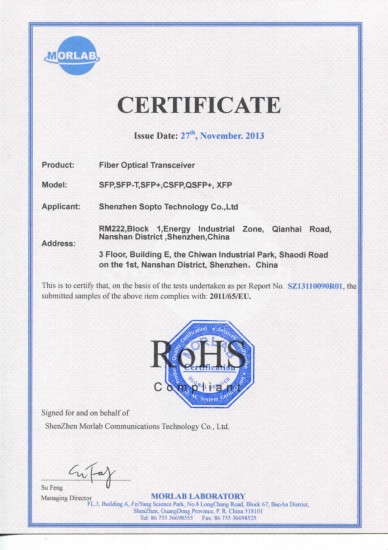
Certificate


Guarantee
Except products belongs to Bargain Shop section, all products are warranted by SOPTO only to purchasers for resale or for use in business or original equipment manufacturer, against defects in workmanship or materials under normal use (consumables, normal tear and wear excluded) for one year after date of purchase from SOPTO, unless otherwise stated...
Return Policies
Defective products will be accepted for exchange, at our discretion, within 14 days from receipt. Buyer might be requested to return the defective products to SOPTO for verification or authorized service location, as SOPTO designated, shipping costs prepaid. .....
Applications
Fiber Optis can be used in so many fields:
Data Storage Equipment
Interconnects,Networking
Gigabit Ethernet
FTTx, HDTV,CATV
Aerospace & Avionics
Data Transfer Tests
Network Equipment
Broadcast Automotive
Electronics,Sensing
Oil & Gas, Imaging
Outside Plant,Central Office
Harsh Environment
Data Transmission
Illumination,Institutions
Ship to Shore,Education
Simulation,Military,Space
Unmanned Aerial Vehicles
Semiconductor Equipment
Diagnostics & Troubleshooting
Premise Networks Carrier Networks
Independent Telecommunication Providers
SNS Page


SOPTO Products
- Fiber Optic Transceiver Module
- High Speed Cable
- Fiber Optical Cable
- Fiber Optical Patch Cords
- Splitter CWDM DWDM
- PON Solution
- FTTH Box ODF Closure
- PCI-E Network Card
- Network Cables
- Fiber Optical Adapter
- Fiber Optical Attenuator
- Fiber Media Converter
- PDH Multiplexers
- Protocol Converter
- Digital Video Multiplexer
- Fiber Optical Tools
- Compatible
Related Products
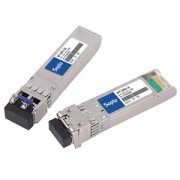 10G SFP+ Transceiver
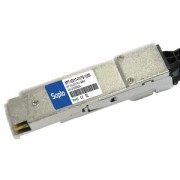 40G QSFP+ Transceiver
Performance Feature
Fiber Optics knowledge
Recommended
Equipment for Splicing of Fibers
Fiber splicing means that two fiber ends are put together such that light can get from one fiber to the other without excessive coupling losses. One has to distinguish two techniques:
- Mechanical splicing uses mechanical parts to attach the fiber ends.
- Fusion splicing means that the fiber ends are fused together with a heat treatment.
Mechanical splices can be made with relatively simple consumables and do not require expensive equipment. One simply has to insert the stripped and cleaved fiber ends into the mechanical splice. (Some versions are transparent, so that the fiber end can be seen inside.) With locking nuts, one can fix the fibers.
The fibers needs to be inserted so far that essentially no air gap will be between the fiber ends. Some mechanical splices are reusable, i.e., one may take out the fibers and use the splice for other fibers. Others allow the use of an index-matching fluid, which can substantially reduce the insertion loss, but requires additional cleaning when a splice is redone. In some cases, one bonds the fibers with a UV-curable epoxy, which of course leads to permanent (not reusable) splices.

For fusion splicing, there are sophisticated fusion splicing apparatuses. One has to insert the stripped and carefully cleaved fiber ends into clamps and position them properly. Triggered by a button press, the apparatus then puts the fiber ends close together and applies heat from an electrical arc (or possibly with a CO2 laser), such that the fiber ends are fused together. Fusion splicers are quite expensive, but they produce the most reliable and low-loss splices, and this without requiring expensive consumables.
Although fusion splices are comparably robust as the original fiber, the stripped fiber is less well protected. Therefore, one often uses splice protection sleeves to protect the spliced region.
For more information, please browse our website or contact a Sopto representative by calling 86-755-36946668, or by sending an email to info@sopto.com.