


FTTH Knowledge
- Solving the FTTH Rollout Problem in Multiple Dwelling Units
- WDM PON Introduction FAQ
- A Simple Overview of Optical Power Meter
- ODN is based on PON FTTH Optical Cable Network of the Device
- Using an OTDR to be an Expert in Fiber Link Testing
- How FTTH Broadband Works?
- Connections among Fiber Terminal Boxes & Patch Cables & Pigtails
- Easy to Install a Fiber Terminal Box
- What is Arrayed Waveguide Grating?
SOPTO Special Topic
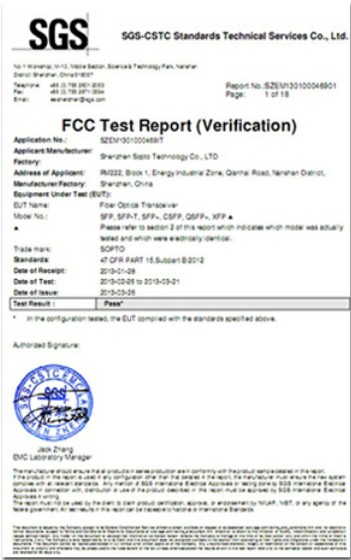
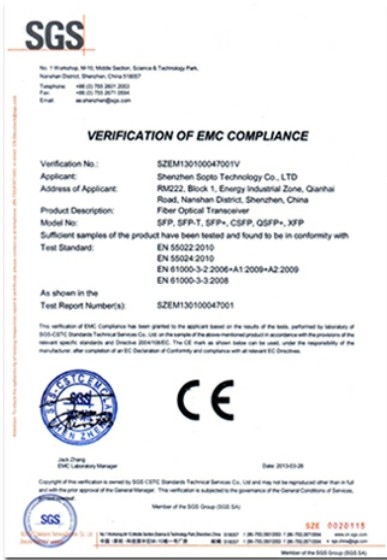
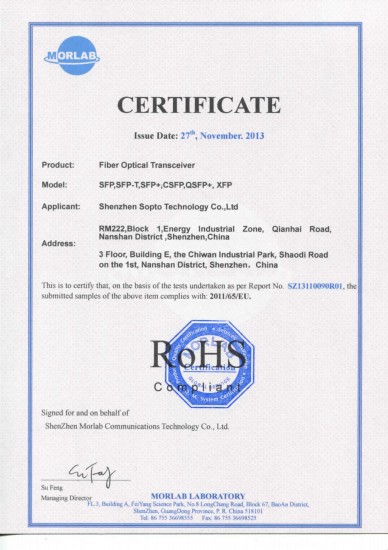
Certificate
Guarantee
Except products belongs to Bargain Shop section, all products are warranted by SOPTO only to purchasers for resale or for use in business or original equipment manufacturer, against defects in workmanship or materials under normal use (consumables, normal tear and wear excluded) for one year after date of purchase from SOPTO, unless otherwise stated...
Return Policies
Applications
Sopto supply the best FTTH solutions for your network!
SNS Page


SOPTO Products
- Fiber Optic Transceiver Module
- High Speed Cable
- Fiber Optical Cable
- Fiber Optical Patch Cords
- Splitter CWDM DWDM
- PON Solution
- FTTH Box ODF Closure
- PCI-E Network Card
- Network Cables
- Fiber Optical Adapter
- Fiber Optical Attenuator
- Fiber Media Converter
- PDH Multiplexers
- Protocol Converter
- Digital Video Multiplexer
- Fiber Optical Tools
- Compatible
Related Products
Performance Feature
Recommended
- EPON Uplink and Downlink Technology
Between the OLT and ONU EPON, there is a single optical fiber to provide symmetric 1.25Gbps bandwidth limitations by physical interface, the actual provision of 1Gbps bandwidth to transmit data, voice and video services.
- What is Primary Fiber Concentration Point (FCP)?
The feeder cabling will eventually need to convert to smaller distribution cables. This is achieved at the first point of flexibility within the FTTH network, which can be generally termed the Primary Fiber Concentration Point (FCP).
- Comparison of EPON and ADSL
ADSL After several years of vigorous development has become China's most popular fixed-line operators in broadband access means.
- Why “fiber connections” have an attraction for the CATV provider
A number of factors are increasing the interest among telecommunications providers in offering the “triple play” services of voice, video and high-speed data access. Most importantly, subscribers are finding a growing number of applications that drive the
- EPON Technical Advantages
With EPON technology matures, the industry mainstream operators have started large-scale deployment of EPON system, expand FTTx applications, and on this basis to achieve Triple Play, build triple play access platform.
- Advantages of Drop Cables in FTTH
The drop cabling forms the final external link to the subscriber and runs from the last FCP to the subscriber building with a distance restricted to less than 500 meters and often much less for high density areas.
- Optical WDM in Fiber Optic Network
Optical WDM networks are networks that deploy optical WDM fiber links where each fiber link carries multiple wavelength channels.
- Useful feeder cable in FTTH
The feeder cabling runs from the Access Node to the first or primary Fiber Concentration Point (FCP).
- Best Practices for Testing FTTH Deployments
Deploying fiber to the home requires learning a new set of network testing practices. Here’s a quick summary of what operators need to know and when they need to know it.
- Fiber Installation Testing
Fiber connectors are widely known as the weakest points in a network. The more connections in a network, the greater is the potential for problems caused by improper handling during installation, operation, expansion and maintenance.
- What is Secondary Fiber Concentration Point (FCP)?
In certain cases, the fibers may need to be broken down at a second fiber concentration point within the FTTH network before final connection to the subscriber. As with the primary FCP, this second point also needs to be a point of flexibility allowing fa
- The importance of Economic considerations for Fiber Access Netwo
Besides technical performance, economic considerations play a key role in deciding for a particular architecture. The duct pattern may be the same for all three architectures (point to point, active star and passive star).
- FTTH Access Node
The Access Node, often referred to as the Point of Presence (POP), acts as the starting point for the optical fibre path to the subscribing customer.
- FTTH Network Infrastructure Environment
The deployment of fibre closer to the subscriber base will require that consideration be given to infrastructure deployment on public and private land, and also within public and private properties.
- What is Visual Fault Locator and How to Use It?
The Visual Fault Locator (VFL) is an essential tool for every fiber optic tool kit; it is like the continuity tester. The VFL is not one of the least expensive tools in your tool kit.
- Basic Description of a FTTH Network Infrastructure
To describe an FTTH infrastructure network, it is essential to understand some of the basics. An FTTH network will normally form part of an existing access network, connecting a large number of end users back to a central point known as an Access Node.
- What is FTTH?
In a nutshell, FTTH (Fiber to the Home) is the idea of bringing high-speed networking, digital television and telephone service to residences using fiber optic cables.
- A brief history of Fiber in the Loop
The first serious interest in fiber to the home (FTTH) began in the late 1980s as the telephone companies gained experience with ISDN wideband services to subscribers. Rapid advances in the technology of optical transmitters, receivers, and fibers made F
- FTTH Development Background and history
In the 1970’s telephone and cable-TV companies realized the advantages of replacing metallic cables with fiber. Due to the underdevelopment of fiber optic technology, the costs of building a fiber optic network where is too high.
- Three Fiber Access Network Architectures
The first on is the Point-to-point architecture, where individual fibers run from the local exchange to each home. Many fibers are needed, which entails high first installation costs, but also provides the ultimate capacity and the most flexibility to upg