-

- Sopto Home
-

- Special Topic
-
- Multiplexer Knowledge
-
- What is Reconfigurable Optical Add-Drop Multiplexer (ROADM)?

Multiplexer Knowledge
- Why is Multiplexing Needed in Data Communication Systems?
- What is Concept of Multiplexing in Telephone System?
- What is Digital TV Frequency?
- Outlook of the WDM Networks
- DWDM Technical Overview
- CWDM Technical Overview
- How to Activate Cable Modems?
- How to Install a Fiber Optic Modem?
- How do I Choose a Best Fiber Modem?
SOPTO Special Topic
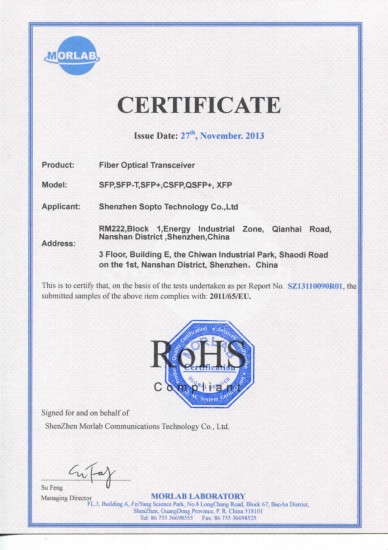
Certificate


Guarantee
Except products belongs to Bargain Shop section, all products are warranted by SOPTO only to purchasers for resale or for use in business or original equipment manufacturer, against defects in workmanship or materials under normal use (consumables, normal tear and wear excluded) for one year after date of purchase from SOPTO, unless otherwise stated...
Return Policies
Defective products will be accepted for exchange, at our discretion, within 14 days from receipt. Buyer might be requested to return the defective products to SOPTO for verification or authorized service location, as SOPTO designated, shipping costs prepaid. .....
Applications
Multiplexers can be used to connect PBX, Hot line and other devices of network from central site to user site through fiber optical cable.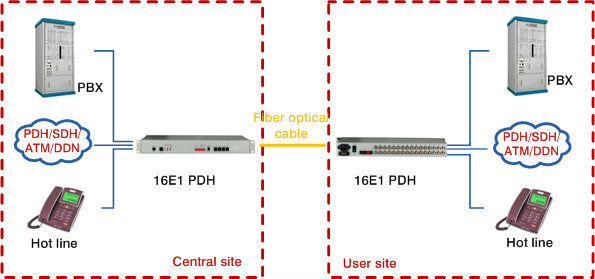
SNS Page


SOPTO Products
- Fiber Optic Transceiver Module
- High Speed Cable
- Fiber Optical Cable
- Fiber Optical Patch Cords
- Splitter CWDM DWDM
- PON Solution
- FTTH Box ODF Closure
- PCI-E Network Card
- Network Cables
- Fiber Optical Adapter
- Fiber Optical Attenuator
- Fiber Media Converter
- PDH Multiplexers
- Protocol Converter
- Digital Video Multiplexer
- Fiber Optical Tools
- Compatible
Related Products
Performance Feature
High integration desig
Low power consumption
Good EMC, EMI
Stable and Reliable
Multiplexer Knowledge
Recommended
What is Reconfigurable Optical Add-Drop Multiplexer (ROADM)?
A reconfigurable optical add-drop multiplexer (ROADM) is a device that can add, block, pass or redirect modulated infrared (IR) and visible light beams of various wavelengths in a fiber optic network. ROADMs are used in systems that employ wavelength division multiplexing.
Before the development of optical multiplexing devices such as ROADMs, signal routing in fiber optic networks was done by converting the IR or visible beams to electrical signals and routing those signals using conventional electronic switches. The rerouted electrical signals were then converted back into IR or visible beams.
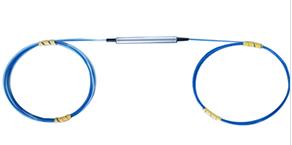
In a conventional ROADM, switching is accomplished without optical-to-electrical or electrical-to-optical conversion using three operations called add, drop and cut-through. An outgoing IR or visible beam can be generated (the add operation) or an incoming beam terminated (the drop operation). A beam can also be passed through the device without modification (the cut-through operation). In combination, these functions allow optical signal routing of considerable complexity. The configuration of the system can be changed remotely.
Two major ROADM technologies are in current use. They are called wavelength blocking (WB) and planar light-wave circuit (PLC). Wavelength blocking, also called first-generation ROADM technology, is the older of the two. When a wavelength change is necessary for a particular channel, the IR or visible light beam at the original wavelength is filtered out and its data extracted. Then the data is impressed onto a beam of another wavelength. PLC or second-generation ROADM technology in effect combines these steps, streamlining the process and reducing the cost.
Neither the WB nor the PLC ROADM designs facilitate true optical branching, in which beams of any wavelength can be directly routed to any desired port without the need to perform multiple intermediate operations. Optical branching capability is important in the deployment of efficient, reliable, high-volume optical networks designed to provide advanced services such as video on demand (VoD). An evolving technology called enhanced ROADM (eROADM) makes true optical branching possible.
For More Information about Multiplexing and Multiplexers, please visit our website sopto.com.