-

- Sopto Home
-

- Special Topic
-
- FTTH Knowledge
-
- WDM-PON Standards Playing the Long Game

FTTH Knowledge
- Solving the FTTH Rollout Problem in Multiple Dwelling Units
- WDM PON Introduction FAQ
- A Simple Overview of Optical Power Meter
- ODN is based on PON FTTH Optical Cable Network of the Device
- Using an OTDR to be an Expert in Fiber Link Testing
- How FTTH Broadband Works?
- Connections among Fiber Terminal Boxes & Patch Cables & Pigtails
- Easy to Install a Fiber Terminal Box
- What is Arrayed Waveguide Grating?
SOPTO Special Topic
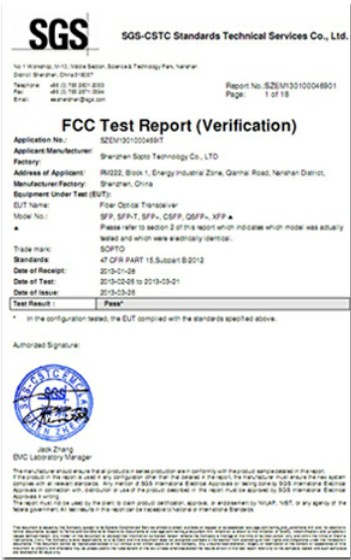
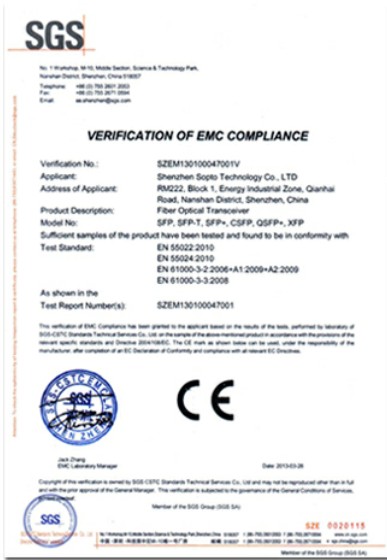
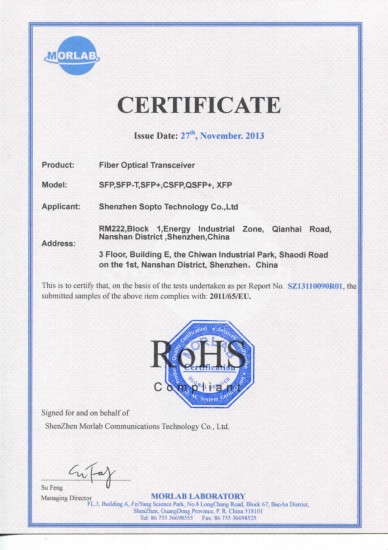
Certificate
Guarantee
Except products belongs to Bargain Shop section, all products are warranted by SOPTO only to purchasers for resale or for use in business or original equipment manufacturer, against defects in workmanship or materials under normal use (consumables, normal tear and wear excluded) for one year after date of purchase from SOPTO, unless otherwise stated...
Return Policies
Defective products will be accepted for exchange, at our discretion, within 14 days from receipt. Buyer might be requested to return the defective products to SOPTO for verification or authorized service location, as SOPTO designated, shipping costs prepaid. .....
Applications

Sopto supply the best FTTH solutions for your network!
SNS Page


SOPTO Products
- Fiber Optic Transceiver Module
- High Speed Cable
- Fiber Optical Cable
- Fiber Optical Patch Cords
- Splitter CWDM DWDM
- PON Solution
- FTTH Box ODF Closure
- PCI-E Network Card
- Network Cables
- Fiber Optical Adapter
- Fiber Optical Attenuator
- Fiber Media Converter
- PDH Multiplexers
- Protocol Converter
- Digital Video Multiplexer
- Fiber Optical Tools
- Compatible
Related Products
Performance Feature
FTTH Knowledge
Recommended

WDM-PON Standards Playing the Long Game
WDM-PON might not get standardized before 2020. That possibility was raised at the 3rd WDM-PON Forum Workshop, which took place last month in Munich, Germany, alongside the FTTH Conference 2012.
“Under NG-PON2, it is most likely there will be no WDM-PON,” asserted Klaus Grobe, principal engineer at ADVA Optical Networking, who presented an update on standards and research projects.
That doesn’t mean standards work has stalled. On the contrary, the Full Service Access Network (FSAN) group is expected to publish a white paper soon on the technical options for the next-generation of PON standards, which go under the working title of NG-PON2. FSAN’s job is to get everyone to agree upon a single proposal, which it then passes to the International Telecommunications Union (ITU) for standardization.
Five approaches being considered are what might be termed “true” WDM-PON, in which each customer terminal receives a single dedicated wavelength. These approaches fall into two broad categories: tunable-laser-based systems, and “seeded” approaches, where a broadband light source passes through an arrayed waveguide grating (AWG) to create “seed” signals that transmitters can lock onto.
An alternative approach, tipped as the favorite, is “stacked XG-PON” – essentially four XG-PON systems operating at different wavelengths on the same fibre. XG-PON is the 10Gbps successor to GPON, so this approach would have a total capacity of 40Gbps downstream and 10Gbps upstream, shared among all subscribers on that branch of the PON.
WDM-PON proponents say that the higher bandwidth enabled by WDM-PON would be cheaper in the long term; it puts operators ahead of the bandwidth demand curve and thus reduces the number of investment cycles in new equipment. Mass deployment of WDM-PON would require a significant reduction in the cost of components, but literally dozens of companies and research projects are chipping away at this problem.

However, operators may favor a more incremental approach that would be cheaper to implement, and “stacked XG-PON” fits that description. Unlike true WDM-PON, it doesn’t require replacement of splitters in the field, and has the potential to be backwards compatible with previous generations of PON equipment. If stacked XG-PON1 becomes the preferred approach to NG-PON2, then standardization of WDM-PON would have to wait until the following standards cycle. Allowing five years between technology generations, this would mean WDM-PON would probably get standardized around 2020.
In the meantime, WDM-PON has been making progress on a different front: in backhaul and enterprise connections. In the week of the conference, the ITU approved G.698.3 (formerly G.sdapp), which outlines parameters for the physical layer interfaces in “seeded DWDM systems” for metro applications. The initial version of this recommendation includes seeded DWDM applications at 1.25Gbps with 100-GHz channel frequency spacing. The work was led by LG-Ericsson and Korea Telecom, and backs up the approach that they have taken.
The enterprise market already has several WDM-PON vendors. ADVA has offered a solution based on coloured sfp transceivers since 2008. In September 2011 Transmode introduced a product that also uses pluggable transceivers, including an injection-locked self-tuning SFP. And LG-Ericsson continues to promote its Ethernet-based WDM-PON system in the enterprise market.
“If you factor in the savings in opex, then it’s fairly easy to make the business case for WDM-PON [compared to point-to-point connections] even though the capex is higher,” claimed Wim te Niet, vice president of global sales and marketing, access networks, at LG-Ericsson.
But would operators be willing to use WDM-PON in residential access networks without standardization?
“Standards are important,” commented Jorge Bonifácio, head of network strategy, Portugal Telecom. “They are the driver for the mass market. Nevertheless, we will deploy WDM-PON when it makes economic sense to do so.”
Portugal Telecom is looking at upgrade scenarios for GPON, and is evaluating at what point it would become cost effective to deploy WDM-PON. Although the calculations have not been finalized, the operator believes that point will come when the access network needs to support high-capacity, symmetric traffic.
Several speakers highlighted the potential for telecoms operators to merge their access and aggregation networks as a powerful driver for deploying WDM-PON. Deutsche Telekom, for example, believes it can reduce the number of central office sites to about 900, or 10% of their original number. The long reach inherent to WDM-PON (because it doesn’t use power splitters) would make it possible to widen the radius served by each central office to 50km.
These are powerful arguments for deploying WDM-PON even if the technology isn’t fully standardized.
Sopto is focus on FTTH construction that we are a professional fiber to the home server. We supply wide range of fiber optic products, including fiber optic transceivers, PDH Multiplexers, Fiber Media Converters and so on.
For more information, please contact a Sopto representative by calling 86-755-36946668, or by sending an email to info@sopto.com.