-

- Sopto Home
-

- Special Topic
-
- Multiplexer Knowledge
-
- What is the difference between SDH and PDH?

Multiplexer Knowledge
- Why is Multiplexing Needed in Data Communication Systems?
- What is Concept of Multiplexing in Telephone System?
- What is Digital TV Frequency?
- Outlook of the WDM Networks
- DWDM Technical Overview
- CWDM Technical Overview
- How to Activate Cable Modems?
- How to Install a Fiber Optic Modem?
- How do I Choose a Best Fiber Modem?
SOPTO Special Topic
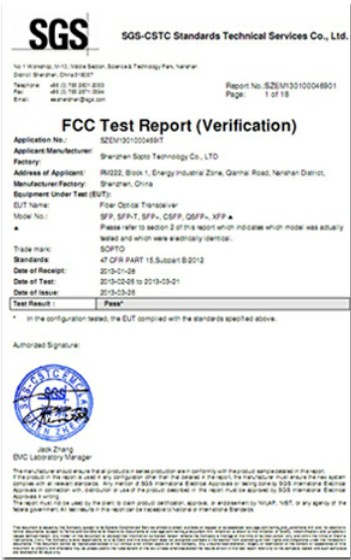
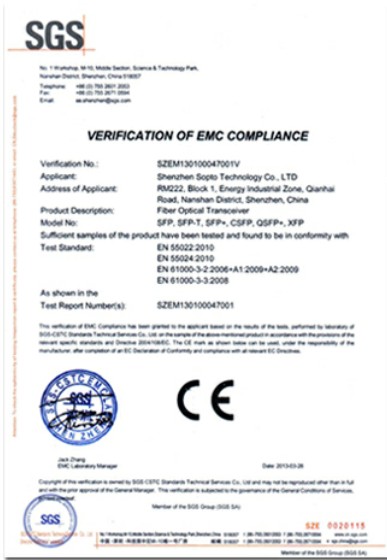
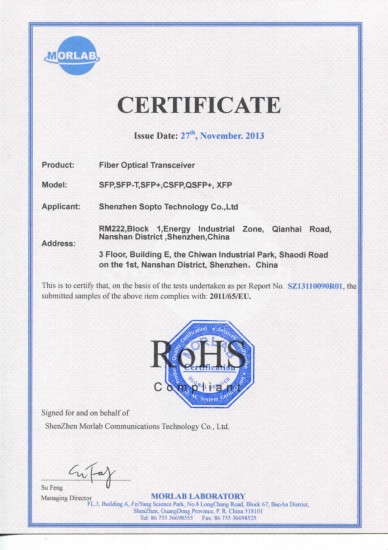
Certificate
Guarantee
Except products belongs to Bargain Shop section, all products are warranted by SOPTO only to purchasers for resale or for use in business or original equipment manufacturer, against defects in workmanship or materials under normal use (consumables, normal tear and wear excluded) for one year after date of purchase from SOPTO, unless otherwise stated...
Return Policies
Defective products will be accepted for exchange, at our discretion, within 14 days from receipt. Buyer might be requested to return the defective products to SOPTO for verification or authorized service location, as SOPTO designated, shipping costs prepaid. .....
Applications
Multiplexers can be used to connect PBX, Hot line and other devices of network from central site to user site through fiber optical cable.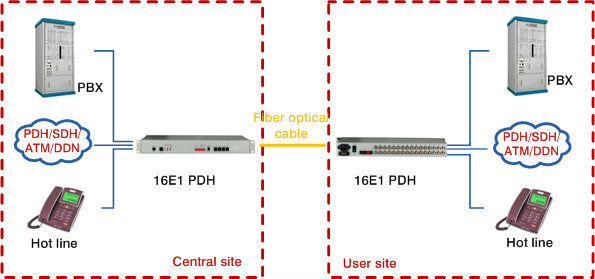
SNS Page


SOPTO Products
- Fiber Optic Transceiver Module
- High Speed Cable
- Fiber Optical Cable
- Fiber Optical Patch Cords
- Splitter CWDM DWDM
- PON Solution
- FTTH Box ODF Closure
- PCI-E Network Card
- Network Cables
- Fiber Optical Adapter
- Fiber Optical Attenuator
- Fiber Media Converter
- PDH Multiplexers
- Protocol Converter
- Digital Video Multiplexer
- Fiber Optical Tools
- Compatible
Related Products
Performance Feature
High integration desig
Low power consumption
Good EMC, EMI
Stable and Reliable
Multiplexer Knowledge
Recommended

What is the difference between SDH and PDH?
PDH or the plesiochronous digital hierarchy is a popular technology that is widely used in the networks of telecommunication in order to transport the huge amounts of data over the digital equipment for transportation like microwave radio or fiber optic systems. The term plesiochronous has been derived from the Greek work ‘plesio’ that means ‘near’ and ‘chronos’ meaning time. This means that the PDH works in a state when the various different parts of a network are clearly synchronized. But with the change in technology, the PDH is now being replaced by the SDH or what is popularly called as synchronous digital hierarchy. The SDH is useful equipment that is used in most of the telecommunications networks.
This PDH helps in proper transmission of the data that generally runs at the similar rate but allows some slight variation in the speed than the nominal rate. The basic transfer rate of the data is 2048 kilobits per second. For instance, in each speech transmission, the normal rate breaks into different thirty channels of 64 kilobits per second along with two different 64 kilobits per second in order to perform the tasks of synchronization and signaling. The typical rate of transmitting the data over the fiber optic systems is 565 Mbit/sec in order to transport the data in the long distance. But as the technology has improved with the passing of time, now the telecommunication companies have replaced the PDH equipment with that of the SDH equipment, which has the capability of transmitting the data at much higher rates as compared to the PDH system.

The SDH is an international standard that is highly popular and used for its high speed data transfer of the telecommunication and digital signals. This synchronous system has been specially designed in order to provide a simple and flexible network infrastructure. This system has brought a considerable amount of change in the telecommunication networks that were based on the optical fibers as far as performance and cost were concerned.
The weaknesses that PDH faced paved way for the introduction and use of the SDH systems. Although the PDH proved to be a breakthrough in the field of digital transmission, the weaknesses that made it less demanded includes:
- Asynchronous structure that is rigid
- Restricted management capacity.
- Non availability of world standard on the digital formats.
- No optical interfaces world standard and without an optical level, networking is not possible.
But if we compare the PDH system with that of the SDH system, the latter one has a large number of advantages. Some of the most common advantages enjoyed by the usage of SDH include:
- optical interfaces
- capability of powerful management
- world standard digital format
- synchronous structure is flexible
- cost effective and easy traffic cross connection capacity and add and drop facility
- reduced networking cost due to the transversal compatibility
- forward and backward compatibility
Apart from all the advantages mentioned above, the SDH also has various management capabilities such as performance management, security and access management, configuration management and the event or the alarm management. So, we can clearly make a distinction between the PDH and SDH systems so that as per the needs of the telecommunication, the appropriate transmission system can be used.
Please note also, that PDH, if we talk as n x E1 G.703 lines to be transmitted, can be developed only up to 16 E1 lines - 34 Mbit/s. But SDH - can reach 155 Mbit/s, which corresponds to STM-1, can reach 622 Mbit/s - STM-4.
However, it has to be noted. that AD-net has done a huge work bridging the gap between SDH and PDH systems, offering customers a SDH systems - particulary from miniSDH and microSDH range, and - close to PDH price! For example, most of the suppliers, if we talk about more than 16E1 - are not able to offer units at reasonable price and still 1U or even 2U high. AD-net have breakthrough unit called AN-SDH63, which is just 1U high, and can send 63E1 over the same fiber.