-

- Sopto Home
-

- Special Topic
-
- Multiplexer Knowledge
-
- What is Software-defined Networking?

Multiplexer Knowledge
- Why is Multiplexing Needed in Data Communication Systems?
- What is Concept of Multiplexing in Telephone System?
- What is Digital TV Frequency?
- Outlook of the WDM Networks
- DWDM Technical Overview
- CWDM Technical Overview
- How to Activate Cable Modems?
- How to Install a Fiber Optic Modem?
- How do I Choose a Best Fiber Modem?
SOPTO Special Topic
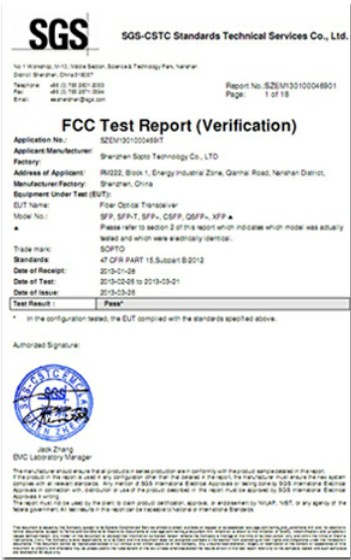
Certificate


Guarantee
Except products belongs to Bargain Shop section, all products are warranted by SOPTO only to purchasers for resale or for use in business or original equipment manufacturer, against defects in workmanship or materials under normal use (consumables, normal tear and wear excluded) for one year after date of purchase from SOPTO, unless otherwise stated...
Return Policies
Defective products will be accepted for exchange, at our discretion, within 14 days from receipt. Buyer might be requested to return the defective products to SOPTO for verification or authorized service location, as SOPTO designated, shipping costs prepaid. .....
Applications
Multiplexers can be used to connect PBX, Hot line and other devices of network from central site to user site through fiber optical cable.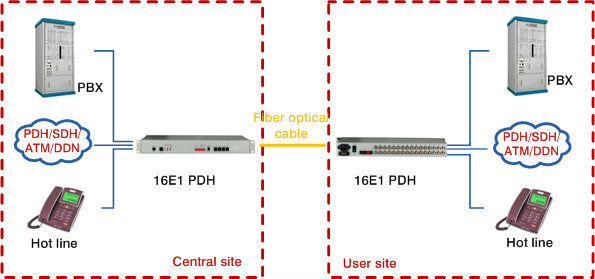
SNS Page


SOPTO Products
- Fiber Optic Transceiver Module
- High Speed Cable
- Fiber Optical Cable
- Fiber Optical Patch Cords
- Splitter CWDM DWDM
- PON Solution
- FTTH Box ODF Closure
- PCI-E Network Card
- Network Cables
- Fiber Optical Adapter
- Fiber Optical Attenuator
- Fiber Media Converter
- PDH Multiplexers
- Protocol Converter
- Digital Video Multiplexer
- Fiber Optical Tools
- Compatible
Related Products
Performance Feature
High integration desig
Low power consumption
Good EMC, EMI
Stable and Reliable
Multiplexer Knowledge
Recommended
What is Software-defined Networking?
Software-defined networking (SDN) is an approach to networking in which control is decoupled from hardware and given to a software application called a controller.
When a packet arrives at a switch in a conventional network, rules built into the switch's proprietary firmware tell the switch where to forward the packet. The switch sends every packet going to the same destination along the same path -- and treats all the packets the exact same way. In the enterprise, smart switches designed with application-specific integrated circuits (ASICs) are sophisticated enough to recognize different types of packets and treat them differently, but such switches can be quite expensive.

SDN type of control
The goal of SDN is to allow network engineers and administrators respond quickly to changing business requirements. In a software-defined network, a network administrator can shape traffic from a centralized control console without having to touch individual switches. The administrator can change any network switch's rules when necessary -- prioritizing, de-prioritizing or even blocking specific types of packets with a very granular level of control.
This is especially helpful in a cloud computing multi-tenant architecture because it allows the administrator to manage traffic loads in a flexible and more efficient manner. Essentially, this allows the administrator to use less expensive, commodity switches and have more control over network traffic flow than ever before.
SDN is sometimes referred to as the "Cisco killer" because it allows network engineers to support a switching fabric across multi-vendor hardware and application-specific integrated circuits. Currently, the most popular specification for creating a software-defined network is an open standard called OpenFlow. OpenFlow lets network administrators remotely control routing tables.