-

- Sopto Home
-

- Special Topic
-
- Multiplexer Knowledge
-
- Info about Optical Time Division Multiplexing

Multiplexer Knowledge
- Why is Multiplexing Needed in Data Communication Systems?
- What is Concept of Multiplexing in Telephone System?
- What is Digital TV Frequency?
- Outlook of the WDM Networks
- DWDM Technical Overview
- CWDM Technical Overview
- How to Activate Cable Modems?
- How to Install a Fiber Optic Modem?
- How do I Choose a Best Fiber Modem?
SOPTO Special Topic
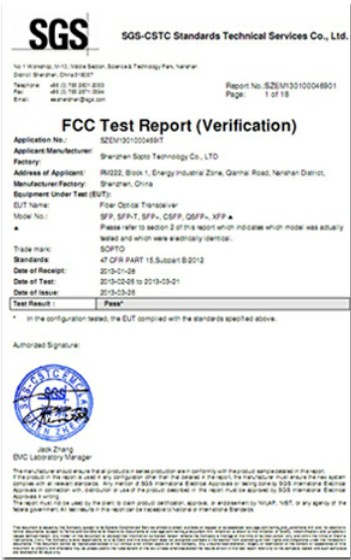
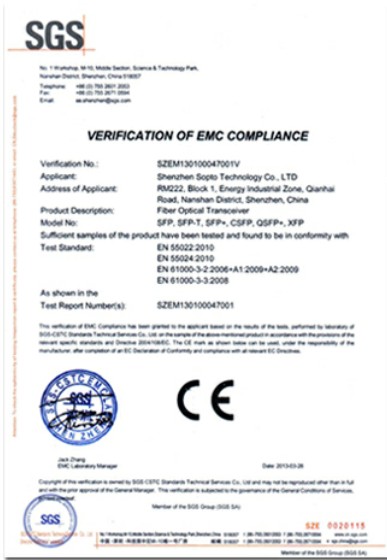
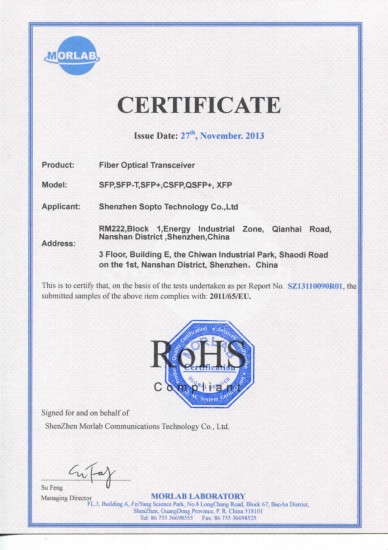
Certificate
Guarantee
Except products belongs to Bargain Shop section, all products are warranted by SOPTO only to purchasers for resale or for use in business or original equipment manufacturer, against defects in workmanship or materials under normal use (consumables, normal tear and wear excluded) for one year after date of purchase from SOPTO, unless otherwise stated...
Return Policies
Defective products will be accepted for exchange, at our discretion, within 14 days from receipt. Buyer might be requested to return the defective products to SOPTO for verification or authorized service location, as SOPTO designated, shipping costs prepaid. .....
Applications
Multiplexers can be used to connect PBX, Hot line and other devices of network from central site to user site through fiber optical cable.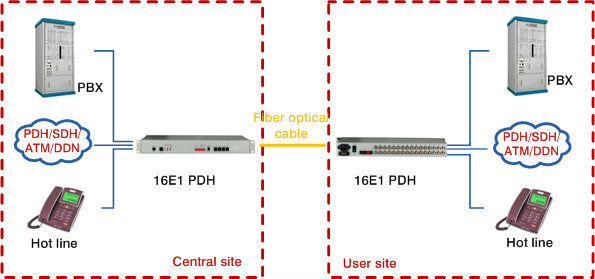
SNS Page


SOPTO Products
- Fiber Optic Transceiver Module
- High Speed Cable
- Fiber Optical Cable
- Fiber Optical Patch Cords
- Splitter CWDM DWDM
- PON Solution
- FTTH Box ODF Closure
- PCI-E Network Card
- Network Cables
- Fiber Optical Adapter
- Fiber Optical Attenuator
- Fiber Media Converter
- PDH Multiplexers
- Protocol Converter
- Digital Video Multiplexer
- Fiber Optical Tools
- Compatible
Related Products
Performance Feature
High integration desig
Low power consumption
Good EMC, EMI
Stable and Reliable
Multiplexer Knowledge
Recommended
Info about Optical Time Division Multiplexing
Optical time division multiplexing (OTDM) is a powerful and scalable technique to investigate high-speed data transmission systems, related signal processing and monitoring technologies at serial data rates beyond the bandwidth limitation of (opto) electronics. The OTDM technique is fundamentally compatible with modern multi-level quadrature-amplitude modulation formats and digital coherent detection.
In contrast to wavelength division multiplexing (WDM), only one wavelength ("color") of light is used.
.jpg)
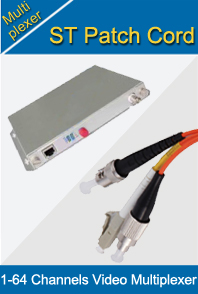
1-64 Channels Video Multiplexer
The operation principle of OTDM is as follows: Different optical pulse streams, called tributaries, originating from the same laser (same central wavelength), are separately encoded by electrically generated data signals. Due to the low duty cycle of their pulses (1.5 ps at 10 GHz) the tributaries are serially bit interleaved in order to form the high speed serial OTDM data signal. At the receiver end, an ultra-fast optical clock and data recovery extracts the individual time-domain tributaries, which are subsequently processed by conventional (opto)electronics.
For more info, please browse our website.