-

- Sopto Home
-

- Special Topic
-
- Multiplexer Knowledge
-
- How Signals Are Transported by SDH?

Multiplexer Knowledge
- Why is Multiplexing Needed in Data Communication Systems?
- What is Concept of Multiplexing in Telephone System?
- What is Digital TV Frequency?
- Outlook of the WDM Networks
- DWDM Technical Overview
- CWDM Technical Overview
- How to Activate Cable Modems?
- How to Install a Fiber Optic Modem?
- How do I Choose a Best Fiber Modem?
SOPTO Special Topic
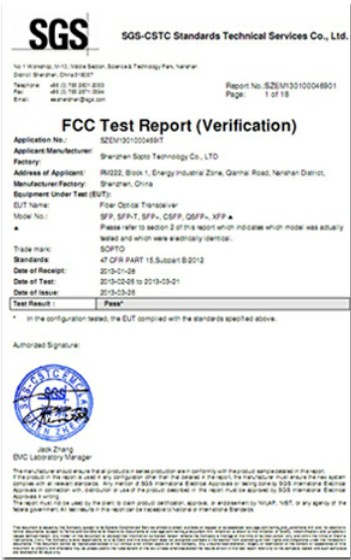
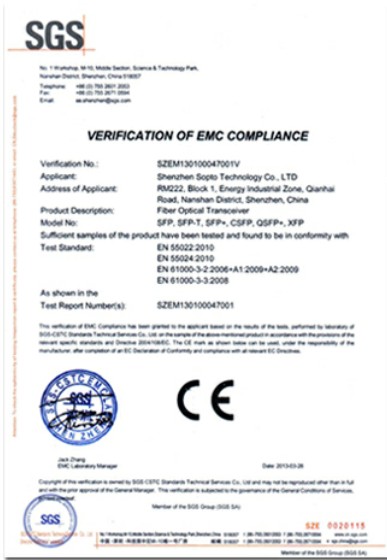
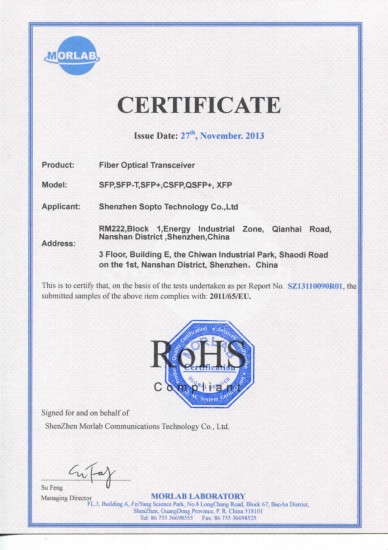
Certificate
Guarantee
Except products belongs to Bargain Shop section, all products are warranted by SOPTO only to purchasers for resale or for use in business or original equipment manufacturer, against defects in workmanship or materials under normal use (consumables, normal tear and wear excluded) for one year after date of purchase from SOPTO, unless otherwise stated...
Return Policies
Defective products will be accepted for exchange, at our discretion, within 14 days from receipt. Buyer might be requested to return the defective products to SOPTO for verification or authorized service location, as SOPTO designated, shipping costs prepaid. .....
Applications
Multiplexers can be used to connect PBX, Hot line and other devices of network from central site to user site through fiber optical cable.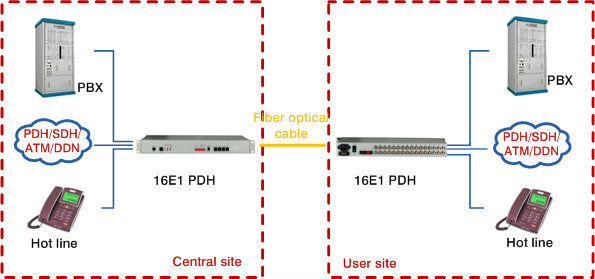
SNS Page


SOPTO Products
- Fiber Optic Transceiver Module
- High Speed Cable
- Fiber Optical Cable
- Fiber Optical Patch Cords
- Splitter CWDM DWDM
- PON Solution
- FTTH Box ODF Closure
- PCI-E Network Card
- Network Cables
- Fiber Optical Adapter
- Fiber Optical Attenuator
- Fiber Media Converter
- PDH Multiplexers
- Protocol Converter
- Digital Video Multiplexer
- Fiber Optical Tools
- Compatible
Related Products
Performance Feature
High integration desig
Low power consumption
Good EMC, EMI
Stable and Reliable
Multiplexer Knowledge
Recommended

How Signals Are Transported by SDH?
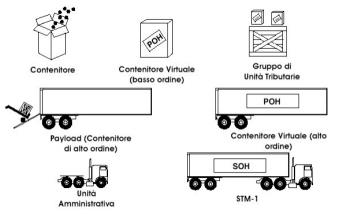
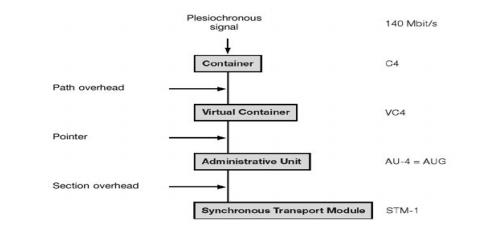
The figure below explains exactly the structure. The container is the basic package unit for tributary channels. A special container is provided for each PDH tributary signal and is always significantly larger than the payload to be transported. The remaining capacity is partly used for justification (stuffing) in order to equalize out-timing inaccuracies in the PDH signals.
A Virtual Container is the entity that travels over the network because it is created or disposed closer to a point of termination service. This is formed by containers and path overhead (POH).
The next step towards formation of a complete STM-N signal is the addition of a pointer indicating the start of the POH. The unit formed by the pointer and the virtual container is referred to as the administrative unit (AU-n) or tributary unit (TU-n). Several Tus together form a tributary unit group (TUG-n) that in turn is collected together into a VC. One or more Aus form an administrative unit group (AUG).
How Signals Are Transported by SDH
Finally the AUG plus the SOH (Section Overhead) form the STM-N.
In technical way