-

- Sopto Home
-

- Special Topic
-
- Multiplexer Knowledge
-
- Benefits of OpenFlow-Based Software-Defined Networks

Multiplexer Knowledge
- Why is Multiplexing Needed in Data Communication Systems?
- What is Concept of Multiplexing in Telephone System?
- What is Digital TV Frequency?
- Outlook of the WDM Networks
- DWDM Technical Overview
- CWDM Technical Overview
- How to Activate Cable Modems?
- How to Install a Fiber Optic Modem?
- How do I Choose a Best Fiber Modem?
SOPTO Special Topic
Certificate



Guarantee
Except products belongs to Bargain Shop section, all products are warranted by SOPTO only to purchasers for resale or for use in business or original equipment manufacturer, against defects in workmanship or materials under normal use (consumables, normal tear and wear excluded) for one year after date of purchase from SOPTO, unless otherwise stated...
Return Policies
Defective products will be accepted for exchange, at our discretion, within 14 days from receipt. Buyer might be requested to return the defective products to SOPTO for verification or authorized service location, as SOPTO designated, shipping costs prepaid. .....
Applications
Multiplexers can be used to connect PBX, Hot line and other devices of network from central site to user site through fiber optical cable.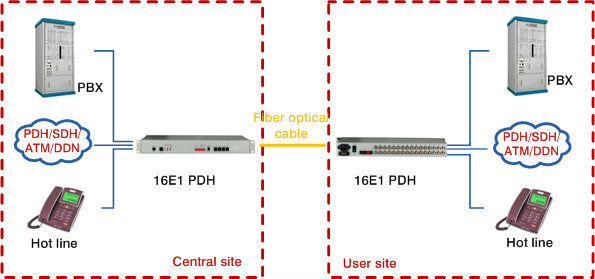
SNS Page


SOPTO Products
- Fiber Optic Transceiver Module
- High Speed Cable
- Fiber Optical Cable
- Fiber Optical Patch Cords
- Splitter CWDM DWDM
- PON Solution
- FTTH Box ODF Closure
- PCI-E Network Card
- Network Cables
- Fiber Optical Adapter
- Fiber Optical Attenuator
- Fiber Media Converter
- PDH Multiplexers
- Protocol Converter
- Digital Video Multiplexer
- Fiber Optical Tools
- Compatible
Related Products
Performance Feature
High integration desig
Low power consumption
Good EMC, EMI
Stable and Reliable
Multiplexer Knowledge
Recommended

Benefits of OpenFlow-Based Software-Defined Networks
For enterprises and carriers alike, SDN makes it possible for the network to be a competitive differentiator, not just an unavoidable cost center. OpenFlow-based SDN technologies enable IT to address the high-bandwidth, dynamic nature of today’s applications, adapts the network to ever-changing business needs, and significantly reduces operations and management complexity.
The benefits that enterprises and carriers can achieve through an OpenFlow-based SDN architecture include:
Centralized control of multi-vendor environments: SDN control software can control any OpenFlow-enabled network device from any vendor, including switches, routers, and virtual switches. Rather than having to manage groups of devices from individual vendors, IT can use SDN-based orchestration and management tools to quickly deploy, configure, and update devices across the entire network.
Reduced complexity through automation: OpenFlow-based SDN offers a flexible network automation and management framework, which makes it possible to develop tools that automate many management tasks that are done manually today. These automation tools will reduce operational overhead, decrease network instability introduced by operator error, and support emerging IT-as-a-Service and self-service provisioning models. In addition, with SDN, cloud-based applications can be managed through intelligent orchestration and provisioning systems, further reducing operational overhead while increasing business agility.
Higher rate of innovation: SDN adoption accelerates business innovation by allowing IT network operators to literally program—and reprogram—the network in real time to meet specific business needs and user requirements as they arise. By virtualizing the network infrastructure and abstracting it from individual network services, for example, SDN and OpenFlow give IT—and potentially even users—the ability to tailor the behavior of the network and introduce new services and network capabilities in a matter of hours.
Increased network reliability and security: SDN makes it possible for IT to define high-level configuration and policy statements, which are then translated down to the infrastructure via OpenFlow. An OpenFlow-based SDN architecture eliminates the need to individually configure network devices each time an end point, service, or application is added or moved, or a policy changes, which reduces the likelihood of network failures due to configuration or policy inconsistencies.

Benefit of SDN for enterprises and carriers
Because SDN controllers provide complete visibility and control over the network, they can ensure that access control, traffic engineering, quality of service, security, and other policies are enforced consistently across the wired and wireless network infrastructures, including branch offices, campuses, and data centers. Enterprises and carriers benefit from reduced operational expenses, more dynamic configuration capabilities, fewer errors, and consistent configuration and policy enforcement.
More granular network control: OpenFlow's flow-based control model allows IT to apply policies at a very granular level, including the session, user, device, and application levels, in a highly abstracted, automated fashion. This control enables cloud operators to support multi-tenancy while maintaining traffic isolation, security, and elastic resource management when customers share the same infrastructure.
Better user experience: By centralizing network control and making state information available to higher-level applications, an SDN infrastructure can better adapt to dynamic user needs. For instance, a carrier could introduce a video service that offers premium subscribers the highest possible resolution in an automated and transparent manner. Today, users must explicitly select a resolution setting, which the network may or may not be able to support, resulting in delays and interruptions that degrade the user experience. With OpenFlow-based SDN, the video application would be able to detect the bandwidth available in the network in real time and automatically adjust the video resolution accordingly.