- Fiber Optic Transceiver Module
- High Speed Cable
- Fiber Optical Cable
- Fiber Optical Patch Cords
- Splitter CWDM DWDM
- PON Solution
- FTTH Box ODF Closure
- PCI-E Network Card
- Network Cables
- Fiber Optical Adapter
- Fiber Optical Attenuator
- Fiber Media Converter
- PDH Multiplexers
- Protocol Converter
- Digital Video Multiplexer
- Fiber Optical Tools
- Compatible

- Can SFP+120KM be available? ...
- Why the price has so huge di...
- Can XFP transceiver modules ...
- Must optical fiber jumper be...
- Is there a module which can ...
- Can different brands SFP tra...
- How long will you change you...
- The difference between DDM S...
- Comparison of EPON and GPON
- Should we use 3rd party’s ...
- How to make differences betw...
- What is Drop Cable?
- Comparison of CWDM and DWDM ...
- GEPON Technology
- Differences of OM1, OM2, OM3...
- What is the armored fiber op...
- What is DAC cable?
- How to Choose A Right Fusion...
- Why Using a Compatible SFP O...
- Optical fiber transmission l...

The manufacturing process of the optical cable
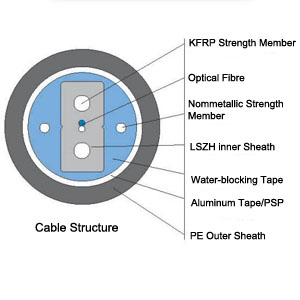
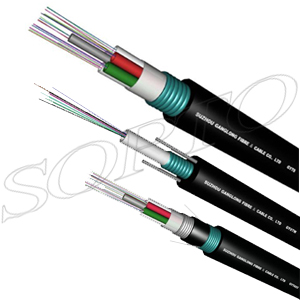
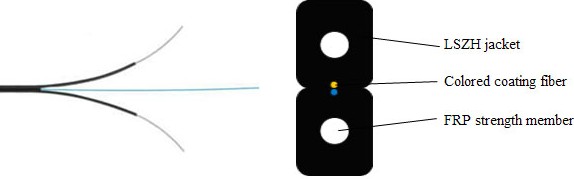
The manufacturing process of fiber optical cable generally includes: firstly, is the selection of fiber optical cable. We should choose the fiber with excellent feature of transmission and the qualified tension. Secondly, we dye the fiber. We identify the fiber cable with the standard chromatography. And the fiber cable must be not fade and migration in high temperature.
Thirdly is the secondary extrusion. We use the plastic with high elastic modules and low coefficient of linear expansion and extrude it into the pipe with a certain size. And we fill the fiber and the moisture-proof and waterproof gel into the pipe. Then we store it a few days (not less than two day). Finally, we twist the number of extruded fiber together with the strengthen unit and add a layer sheath around the cable.
We, Sopto, strictly adhere to the production process provide the standard fiber optical cable for you!
|
Realated Product |
Outdoor Optical Cable | FTTH Drop Cable | |
|
|
|
|