

- Fiber Optic Transceiver Module
- High Speed Cable
- Fiber Optical Cable
- Fiber Optical Patch Cords
- Splitter CWDM DWDM
- PON Solution
- FTTH Box ODF Closure
- PCI-E Network Card
- Network Cables
- Fiber Optical Adapter
- Fiber Optical Attenuator
- Fiber Media Converter
- PDH Multiplexers
- Protocol Converter
- Digital Video Multiplexer
- Fiber Optical Tools
- Compatible

- OM3 Fiber Patch Cord
- Outdoor Waterproof Fiber Opt...
- Outdoor Water-blocking Roade...
- Outdoor Slotted-Core Fiber O...
- Outdoor Single Mode Figure 8...
- Outdoor Non-metallic Armored...
- Outdoor Loose Tube Optical C...
- Outdoor GYTA Optical Cable
- Outdoor Figure 8 Leaper Cabl...
- Outdoor Drainage Pipeline Ca...
- Outdoor Direct Buried Fiber ...
- Outdoor Direct Buried Double...
- Outdoor All Dielectric Self-...
- Outdoor GYTS Loose Tube Opti...
- Indoor Self-Supporting Drop ...
- Indoor Fiber Ribbon Drop Cab...
- Indoor Duct Water-Blocking D...
- Outdoor Small Diameter Air B...
- Indoor Bow-type Drop Cable
- Maintained Methods of Fusion...

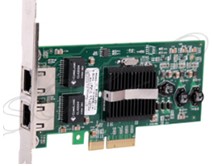
Gigabit Dual RJ45 Slots PCI-E 1.0 Server Adapter Card
Gigabit Dual RJ45 Slots 1.0 PCI-E Server Adapter Card
| Manufacturer: SOPTO |
 |
| Support Bandwidth: 10M/100M/1000M | |
| Bus Type: PCI Express 1.0a | |
| Bus Width: x4 lane PCI Express | |
| Working Slot: Operable in x4, x8 and x16 slots | |
| Network Interface: 2 RJ45 Slots | |
| Connector Type: RJ45 | |
| Suitable for Copper Direct Cables |
SOPTO PRO/1000 PT Dual Port Server Adapter provides 10/100/ 1000 Mbps self-configuration for compatibility with mixed-speed network devices, and it supports Microsoft* Device Manager. Conserve valuable PCI Express (PCIe*) server slots while adding multi-port Gigabit Ethernet capability with the SOPTO PRO/1000 PT Dual Port Server Adapter.
The dedicated I/O bandwidth of PCIe ensures priority performance on each port, without bus sharing, for Gigabit Ethernet connectivity in Category-5 networks. Additionally, SOPTO PRO/1000 PT Dual Port Server Adapter is designed to provide high performance in multi-processor systems by efficiently balancing network loads across multiple Central Processing Units (CPUs) when used with Receive-Side Scaling from Microsoft or Scalable I/O on Linux… [Details]