

- Fiber Optic Transceiver Module
- High Speed Cable
- Fiber Optical Cable
- Fiber Optical Patch Cords
- Splitter CWDM DWDM
- PON Solution
- FTTH Box ODF Closure
- PCI-E Network Card
- Network Cables
- Fiber Optical Adapter
- Fiber Optical Attenuator
- Fiber Media Converter
- PDH Multiplexers
- Protocol Converter
- Digital Video Multiplexer
- Fiber Optical Tools
- Compatible

- OM3 Fiber Patch Cord
- Outdoor Waterproof Fiber Opt...
- Outdoor Water-blocking Roade...
- Outdoor Slotted-Core Fiber O...
- Outdoor Single Mode Figure 8...
- Outdoor Non-metallic Armored...
- Outdoor Loose Tube Optical C...
- Outdoor GYTA Optical Cable
- Outdoor Figure 8 Leaper Cabl...
- Outdoor Drainage Pipeline Ca...
- Outdoor Direct Buried Fiber ...
- Outdoor Direct Buried Double...
- Outdoor All Dielectric Self-...
- Outdoor GYTS Loose Tube Opti...
- Indoor Self-Supporting Drop ...
- Indoor Fiber Ribbon Drop Cab...
- Indoor Duct Water-Blocking D...
- Outdoor Small Diameter Air B...
- Indoor Bow-type Drop Cable
- Maintained Methods of Fusion...

Cable Labeling as Part of Data Center Management
Cable Labeling as Part of Data Center Management
In this page, we will discuss the need for proper labeling of cables, servers, and storage hardware. We have been in many data centers over time and have seen extremes from no labeling to everything being labeled. What we will try to assist you with in this blog entry is find a happy medium between the two.
Cable Labeling – The importance here is to ensure that each end of the cable is labeled, as well as any junction box interconnects that may exist for the same portion of glass or copper. This will ensure that when there is a physical plant problem of some kind, it will make it extremely easy for you to locate and run down the issue.
The same process holds true when it comes to labeling your power cords to include the source and destination for the device and the PDU’s. This will ensure you have the same physical tracing abilities as you have for networked cables. There are many misconceptions that you need to spend a slew of money on an expensive cable labeling system (1k and more).
However we have found that all you really need is a laser printer and some sheets with printer labels on them. These printable labels will work on both copper and glass.
As important as the actual labeling of these cables is, the maintenance of those labels over time is even more critical since device names, ports and locations can change over time. Keeping up with these changes will ensure that everything in your cable plant is always easily identifiable.
Server Labeling – It is also important to ensure that you label the front and back of your servers. Typically we have seen the name of the server as well as the asset tag in the same location, if possible. The same rules apply to server labeling as cable labeling: Make sure it is done with labeling equipment or printable labels and pick a visible location on the front and back of the server. This will ensure anyone can locate it versus having to dive into the server rack to locate the server label.
Storage Array Labeling – It is not unlike server labeling but it will depend somewhat on what kind of storage subsystem you are using as to where the labeling will go. If it comes pre-racked, we would take the approach to not only label the front and back of the rack, but also to go inside the rack, and label the control and disk shelves in the front and back. This may seem a bit like overkill, but you will thank yourself when it’s two o’clock in the morning, and there is an issue you need to resolve with a disk-shelf or control shelf.
Other thing to keep in mind is if your Storage Manufacturer provides logical names to the disk shelves and controllers that you use those names to label the physical equipment. This makes it extremely important if you manage all of your storage remotely (Co-Location), and need to have operations of maintenance people from the manufacturer perform the maintenance.
In summary, remember the more planning you do on the front-end makes your life that much easier when it comes to dealing with issues on a physical level. Let’s face it, we all have some form of SLA’s to adhere to with our customers. It may not seem like it but proper labeling will allow you to ensure that the issues can be addressed with speed and accuracy.
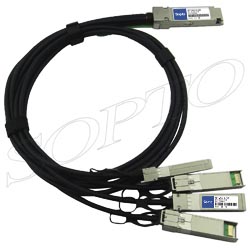
Sopto supplies high quality copper cables, like SFP+ Twinax Cables, XFP to XFP Cables and so on with reasonable price for 10 gigabit Ethernet Data Center applications. For the newest quotes, please contact a Sopto representative by calling 86-755-36946668, or by sending an email to info@sopto.com. For more info, please browse our website.